There is a particular seat I tend to notice.
The one facing the kitchen.
From there, dinner has two stories.
One arrives on the plate.
The other happens behind it.
Watching The Work
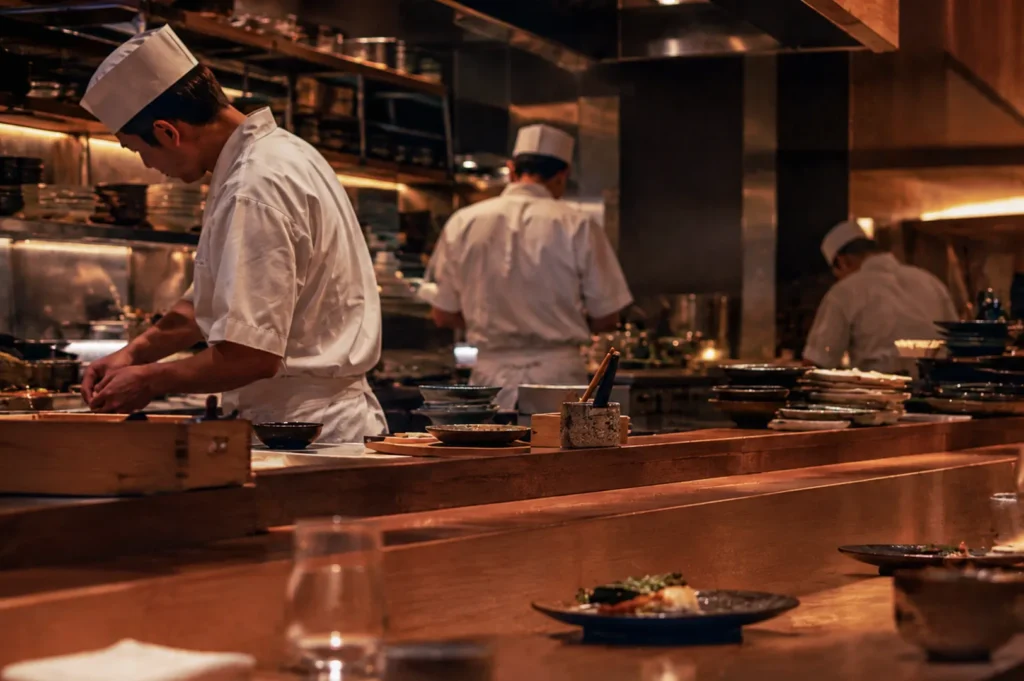
At first, you notice the obvious movements.
A pan lifted from the heat.
A plate passed from one pair of hands to another.
A chef leaning closer to inspect something before it leaves the kitchen.
Stay there long enough and smaller details begin appearing.
A towel folded and returned to exactly the same place.
A spoon used for tasting.
Two people communicating with little more than a glance.
Someone wiping the edge of a plate just before it disappears toward the dining room.
None of this feels designed for the guest.
That is why I enjoy watching it.
Repetition
Much of restaurant cooking is repetition.
The romantic image of a chef is often about invention: the new dish, the unexpected ingredient, the sudden idea.
Service looks different.
During service, craft often means doing something you already know how to do, then doing it again with the same concentration.
The fifth plate matters as much as the first.
So does the fifteenth.
This is easy to forget when exploring Singapore's fine dining restaurants, where the finished dishes can appear almost impossibly precise.
From the dining room, we see the result.
From the seat facing the kitchen, we begin to see the repetition behind it.
A Different Kind Of Conversation
Kitchens have their own language.
Not always words.
A hand reaches out before something is passed.
Someone moves aside without being asked.
A chef looks toward another station and immediately understands what is missing.
There is rhythm in this.
During the busiest part of dinner, the kitchen can appear both hurried and controlled.
Movement everywhere.
Very little wasted.
Then suddenly, between courses, a brief stillness.
Someone takes a drink of water.
A surface is wiped.
The next sequence begins.
What A Plate Carries
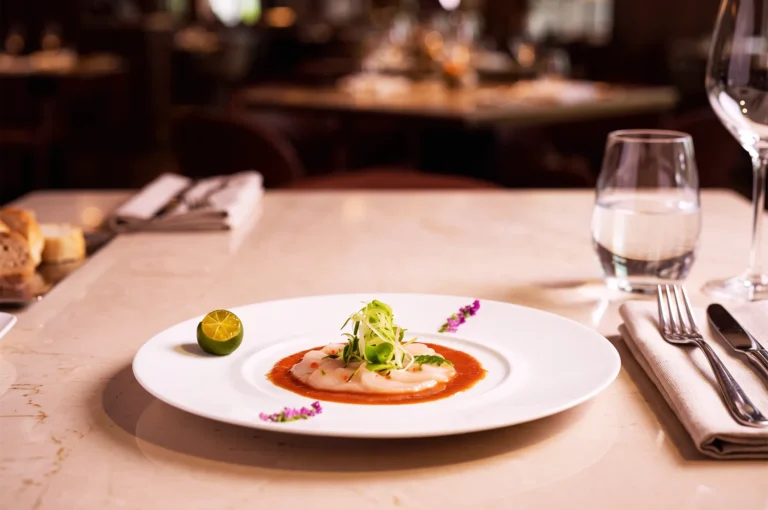
When the dish eventually reaches the table, it looks still.
That contrast stays with me.
A few seconds earlier, it was surrounded by movement.
Now it sits quietly beneath the dining room lights.
The guest sees the arrangement.
Perhaps the ingredients are explained.
Then the first bite is taken, and the work begins disappearing.
That is the strange nature of cooking.
Something can take hours to prepare and minutes to consume.
Its permanence was never the point.
Looking Back 2
Toward the end of dinner, the kitchen begins changing.
The movements become less frequent.
Some stations start cleaning.
Containers are closed.
The urgency that defined the middle of service slowly loosens.
From my seat, I can see both sides now.
A dining room lingering over its final courses.
A kitchen beginning to finish.
Eventually, my plate is cleared too.
I look toward the kitchen once more.
Someone is wiping down the counter.
Another service nearly over.
Tomorrow, many of the same gestures will happen again.
The towel will return to its place.
The spoon will taste another sauce.
Another plate will cross the pass.
And from somewhere in the dining room, perhaps someone else will be watching.