Imagine ordering sushi and receiving just one piece.
You eat it.
A few moments later, another piece appears.
Then another.
For someone accustomed to ordering sushi platters, an omakase dinner can initially feel unusually slow.
Why not simply prepare everything at once?
After all, wouldn't that be more efficient?
But at a traditional sushi-focused omakase counter, the deliberate pace is not an inconvenience.
It is part of the experience.
And once you understand why, you may never think about sushi quite the same way again.
Sushi Is More Sensitive to Temperature Than You Think
One of the most overlooked details in sushi preparation is temperature.
Many people assume that excellent sushi simply requires exceptionally fresh fish.
Freshness and proper handling are fundamental, but temperature can also significantly influence the way sushi tastes and feels.
Consider the rice.
Traditional sushi rice is seasoned with vinegar and prepared to achieve a particular balance of texture, moisture, and flavour.
At many Edomae-style sushi counters, it is served at a carefully controlled temperature rather than straight from the refrigerator.
The fish topping may be cooler than the rice.
That contrast creates a distinctive sensation.
If several pieces were prepared and left sitting on a plate, those temperatures could change before you reached them.
Serving sushi individually helps the chef maintain the intended balance.
Timing Can Change the Experience
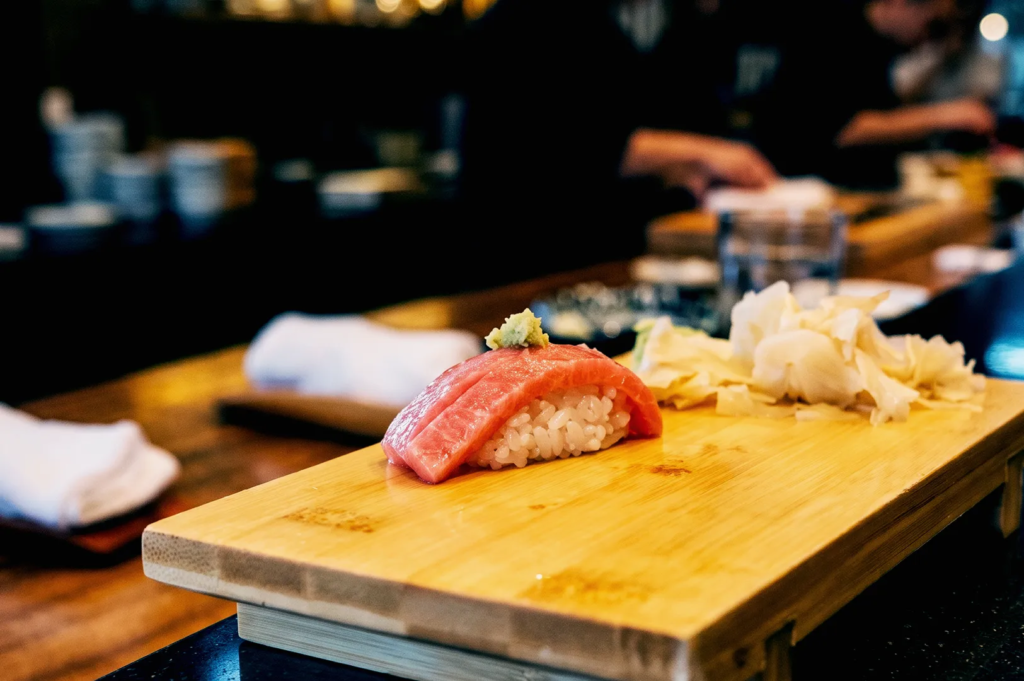
Picture a chef carefully forming a piece of nigiri.
The rice is gently shaped. A slice of fish is positioned over it. A small amount of seasoning may be added.
Then the piece is placed in front of you.
At that moment, the sushi is ready to be eaten.
Not five minutes later.
Now.
The rice has the texture the chef intended. The topping has been prepared for immediate enjoyment.
This is why some sushi chefs encourage guests to eat each piece promptly.
It is not simply a matter of etiquette.
It is about experiencing the food at its intended moment.
Every Piece Has a Place in the Sequence
An omakase meal is rarely a random collection of sushi.
Chefs often consider how flavours and textures develop throughout the experience.
A sequence might begin with lighter, more delicate fish before introducing richer or more intensely flavoured varieties.
Different textures, temperatures, and preparations help create contrast.
The progression can vary considerably depending on the chef, season, and style of restaurant.
But the underlying idea is similar to that of a carefully composed tasting menu.
Each piece contributes to the larger experience.
Serving sushi individually allows guests to appreciate that progression without distractions.
The Counter Creates a Different Relationship With Food
There is another element that makes omakase distinctive.
The chef is often only a short distance away.
You can observe the preparation of each piece, notice subtle differences in technique, and sometimes hear an explanation of the ingredient being served.
That interaction creates an experience quite different from ordering sushi in a conventional restaurant.
The meal becomes a conversation between the kitchen and the diner.
Not necessarily a spoken conversation, although questions and explanations can be part of it.
Rather, the chef communicates through the sequence of ingredients, the method of preparation, and the pace of service.
If you are curious about experiencing this style of dining, our selection of the best omakase counters in Singapore is a useful starting point for discovering restaurants where the counter experience takes centre stage.
Does Eating Slowly Mean Taking Your Time With Each Piece?
Interestingly, there is a distinction between enjoying an unhurried dinner and allowing prepared sushi to sit.
An omakase meal can unfold over a relaxed period, with time for conversation and appreciation between courses.
But once an individual piece of nigiri is served, it is generally best enjoyed promptly.
You are not expected to rush through the evening.
You are simply encouraged to experience each piece when it is at its best.
That balance is one of the quiet pleasures of counter dining.
Why the Smallest Details Matter
A piece of sushi may appear remarkably simple.
Rice. Fish. Perhaps a little seasoning.
Yet simplicity leaves little room to hide imperfections.
When only a few ingredients are involved, their preparation becomes especially important.
The texture of the rice, the cut of the fish, and the balance of seasoning all contribute to the final impression.
Serving each piece at the intended moment is one more way the chef can influence the result.
The Beauty of One Bite at a Time
At first, receiving sushi individually may seem unnecessarily elaborate.
But as the meal progresses, the logic becomes clearer.
You notice the differences between pieces. You become more aware of temperature and texture. You begin anticipating what might come next.
Instead of viewing sushi as a collection of items on a plate, you experience it as a sequence of carefully considered moments.
And perhaps that is the real appeal of omakase.
It reminds us that a memorable meal does not have to arrive all at once.
Sometimes the best way to appreciate good food is to give each bite its own moment.