Imagine sitting at an expensive sushi counter.
The chef stands directly in front of you, carefully slicing fish, shaping rice, and arranging ingredients with remarkable precision.
You expect an explanation of every course, perhaps even a few stories about the ingredients.
Instead, the chef says very little.
A piece of sushi appears. You eat it. The chef begins preparing the next.
For first-time omakase diners, the silence can feel surprisingly intimidating.
Should you ask questions? Are you supposed to start a conversation? Or is everyone expected to sit quietly and admire the chef's technique?
The answer is more interesting than you might expect.
Omakase Isn't Necessarily About Conversation
When people imagine an omakase experience, they often picture an intimate counter where the chef interacts directly with guests.
That interaction can certainly be part of the appeal.
But not every omakase chef approaches hospitality in the same way.
Some are naturally conversational, explaining ingredients, sharing stories about their training, or discussing the inspiration behind individual dishes.
Others prefer a quieter approach.
Their attention remains focused on preparation, timing, and the sequence of the meal.
Neither style is inherently better.
What matters is whether the chef creates an experience that feels welcoming and intentional.
A quiet chef may be concentrating on the food rather than avoiding conversation.
When the Food Does the Talking
Consider how much information can be communicated through a single piece of nigiri.
The rice might be slightly warm. The fish may have been carefully aged or seasoned. A small brush of sauce could provide the finishing touch.
Nothing about the presentation appears particularly complicated.
Yet every element reflects a decision.
At some sushi counters, these decisions form a kind of culinary storytelling.
Rather than describing every detail, the chef allows guests to experience the difference between ingredients and preparations.
A delicate white fish might be followed by something richer. A lightly seasoned piece may contrast with one featuring a more pronounced flavour.
The sequence becomes part of the communication.
You might not understand every technique, but you can appreciate how the meal changes from one course to the next.
Is It Rude to Ask Questions?
This is one of the biggest concerns among first-time omakase diners.
The good news is that asking polite questions is generally acceptable.
In fact, many chefs are happy to explain unfamiliar ingredients or preparation methods when the timing is appropriate.
The key is being considerate.
If the chef is handling delicate ingredients or serving several guests simultaneously, it may not be the ideal moment for a lengthy conversation.
A simple question between courses can feel more natural.
You might ask what type of fish you're eating, whether an ingredient is seasonal, or how the chef recommends enjoying a particular dish.
These questions demonstrate curiosity rather than a lack of knowledge.
And remember, you don't need to understand Japanese cuisine at an expert level to appreciate the experience.
Silence Shouldn't Be Confused With Intimidation
There's an important distinction between a quiet restaurant and an uncomfortable one.
A calm atmosphere can encourage concentration and appreciation.
But guests should never feel unwelcome simply because they're unfamiliar with omakase traditions.
Excellent hospitality should make diners comfortable regardless of their experience.
This is particularly relevant when exploring the best omakase restaurants in Singapore, where different counters offer their own approaches to service, atmosphere, and culinary presentation.
Some diners enjoy lively interactions with the chef.
Others prefer an intimate, contemplative evening where the focus remains almost entirely on the food.
Knowing which environment suits you can make a significant difference.
The Real Art Is Knowing When to Speak
One of the most interesting qualities of an experienced sushi chef is the ability to read the room.
A couple celebrating an anniversary may appreciate privacy.
A curious first-time diner might welcome explanations.
A group of enthusiastic sushi lovers could enjoy discussing ingredients and techniques.
Good hospitality involves recognising those differences.
Sometimes that means sharing a story.
Sometimes it means answering a question.
And sometimes it means allowing guests to enjoy the moment without interruption.
You Don't Have to Fill Every Silence
Modern dining can be surprisingly noisy.
There are conversations, music, phones, and countless distractions competing for attention.
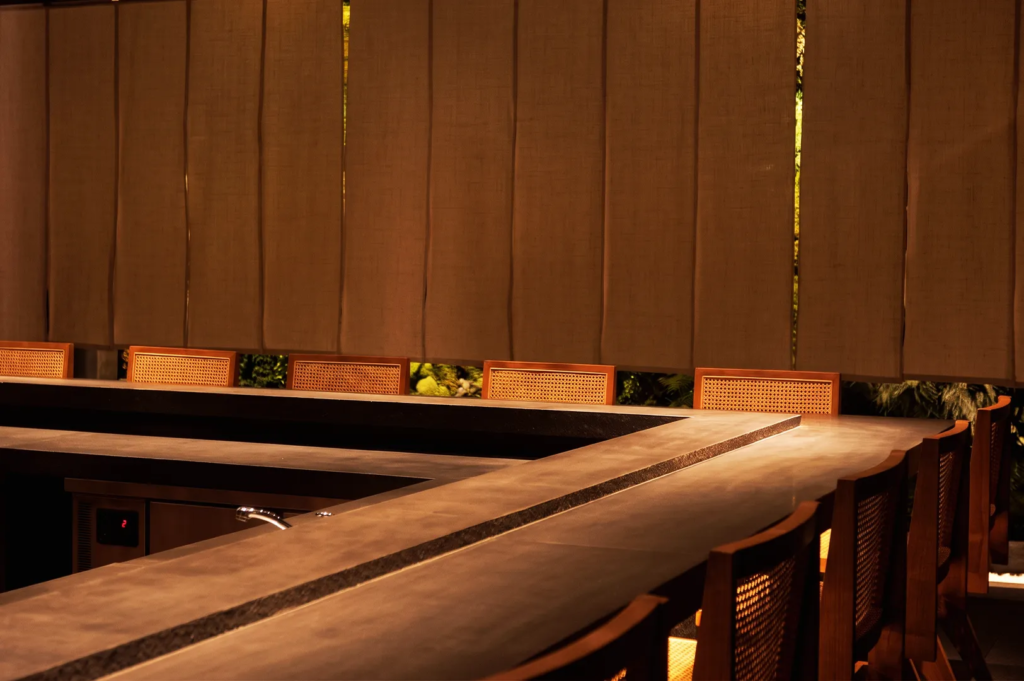
An intimate sushi counter offers a different experience.
You can watch the chef work, notice subtle movements, and concentrate on flavours without constantly feeling the need to speak.
That doesn't mean silence is a requirement.
It simply means conversation isn't the only way to engage with a meal.
The next time you find yourself at an omakase counter with a particularly quiet chef, don't immediately assume something is wrong.
Pay attention to the details instead.
The careful preparation. The timing of each course. The way one piece of sushi leads into another.
Because sometimes, the most interesting part of dinner is everything that happens without a single word.