At three in the afternoon, a restaurant feels like a different place.
Lunch has ended.
Dinner has not begun.
For a few hours, the dining room belongs to neither.
The In-Between Hours
There are traces of lunch if you look closely.
A chair sits slightly away from its table. A water mark remains on the surface before someone wipes it clean. In the kitchen, the last pieces of one service are being put away while preparations for another have already started.
Outside, the afternoon continues.
Inside, the restaurant resets.
This is not the version of a dining room most guests know.
We usually arrive when everything is ready.
The lights are right. The tables are set. The kitchen appears prepared for exactly the moment we walk through the door.
But restaurants spend much of their lives becoming ready.
Starting Again
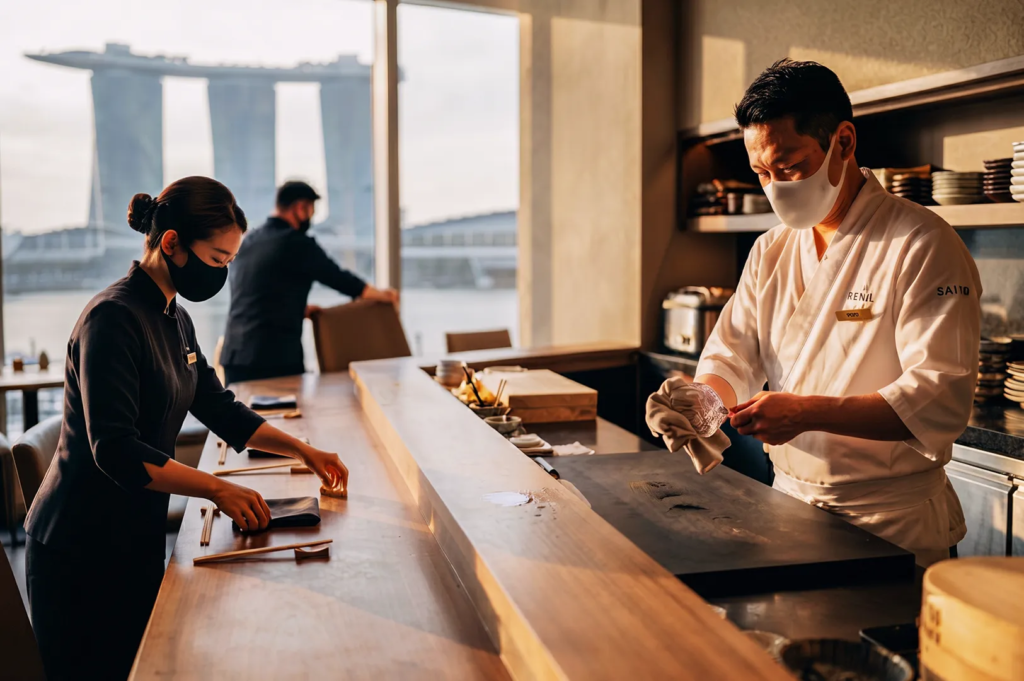
A table is stripped and set again.
Glasses return one by one.
Napkins are folded.
Menus are checked.
Someone walks through the room looking at details most of us will never notice.
What interests me is the repetition.
The same dining room might host dozens of different lives in a single day.
Lunch between colleagues.
A quiet table for one.
Dinner between old friends.
An anniversary.
A first date.
The restaurant prepares for all of them in almost the same way, without knowing which table will become important to someone.
That thought changes how I look at the ritual of setting a room.
What Guests Don't See
Some of the fine dining restaurants in Singapore can feel remarkably composed during service.
Yet composure requires work.
Between lunch and dinner, that work becomes visible.
A chef tastes something and makes a small adjustment.
A server studies the evening's reservations.
A glass is polished again despite already looking clean.
Someone eats a quick staff meal.
Someone else checks the time.
There is no audience for most of this.
Perhaps that is what makes it interesting.
Restaurants are often judged by their finished moments. The plate arriving. The wine being poured. The room glowing after dark.
But the finished moment rests on hundreds of unfinished ones.
The Light Changes
Late afternoon begins to disappear.
The sunlight moves across the floor and leaves the room.
Kitchen lights seem brighter now.
Conversation returns among the team. Jackets are adjusted. The last objects are removed from sight.
Slowly, the restaurant begins looking like the place guests expect to find.
The transformation is subtle.
Nothing dramatic happens.
It simply becomes evening.
Before The Door Opens
Soon, the first reservation will arrive.
Someone will step inside and see a room that appears to have been waiting exactly as it is.
They will not see lunch being cleared.
They will not see the staff meal.
They will not know which glass was polished twice or which table was adjusted at the last minute.
They should not need to.
That is part of hospitality too.
To do the work, then allow the work to disappear.
A final chair is moved a little closer to the table.
Someone looks around the room.
For a moment, everything is still.
Then the door opens, and the restaurant begins again.