At a good sushi counter, there is very little to hide behind. No elaborate plating, no sauce-heavy drama, no long speech to distract from the piece in front of you. At Shoukouwa, a two-Michelin-star Japanese restaurant in Singapore, that simplicity is the entire point: traditional Edomae omakase sushi built around seasonal seafood from Tokyo’s Toyosu Market, careful preparation, and a counter with no more than eight diners.
I’ve come to think of it as an exercise in restraint, and that’s exactly why this piece will be useful to sushi enthusiasts, fine dining regulars, and anyone considering a serious omakase meal for a celebration or a first deep dive into Edomae sushi.
The Shoukouwa Japanese Restaurant Philosophy
Tucked into One Fullerton at 1 Fullerton Road, #02-02A, Shoukouwa seats no more than eight diners at a hinoki counter. This is traditional Edomae sushi, a style born in old Tokyo that prizes seasonal seafood, careful preparation, and serving each piece moments after it’s shaped. Shoukouwa evokes the calm sanctuary of Japan, and its name translates to an oasis of stillness, serenity, and harmony, reflected in the Kanji and construction that suggest peace, health, and harmony.
What makes it work is the sourcing. Seafood arrives from Tokyo’s Toyosu Market four times a week, chosen at its seasonal peak. Having retained two Michelin stars since 2016, Shoukouwa has built its reputation not on reinvention but on consistency. The season decides the menu, not the other way around. At the counter, Chef Nishida brings more than 20 years of experience to each service.
The Shoukouwa Menu: Letting the Season Decide on Sushi and Cooked Dishes
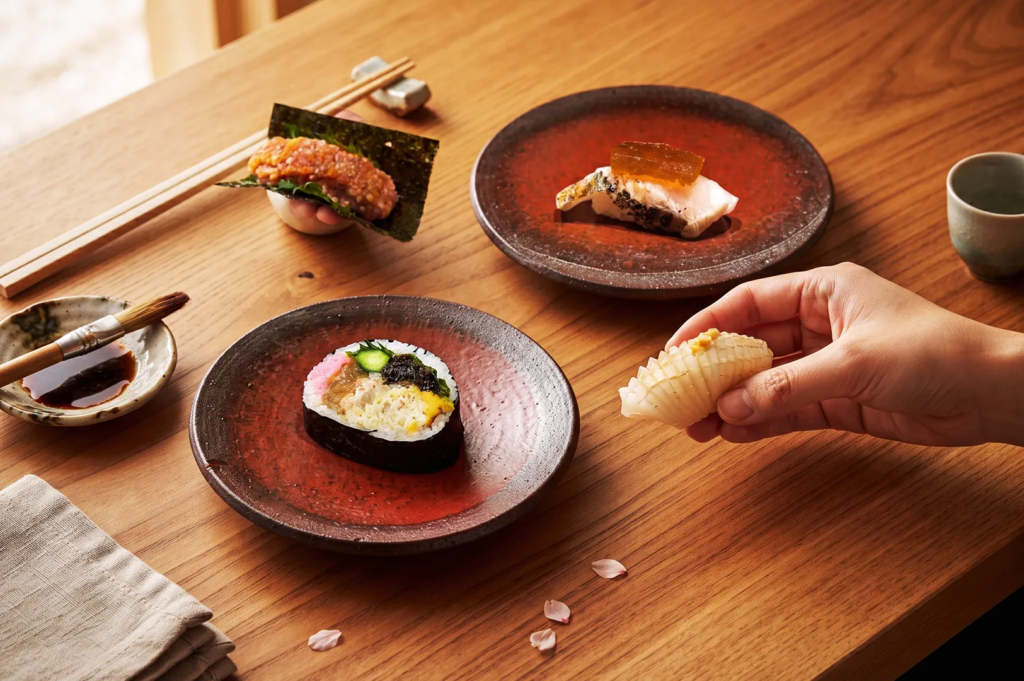
Don’t come expecting a fixed list. Shoukouwa offers three omakase menus—Miyabi, Hana, and En—and the hana menu, available for lunch and dinner, still shifts with whatever the sea is offering. On my visit, that meant a run of sashimi and nigiri built around whatever had flown in that week.
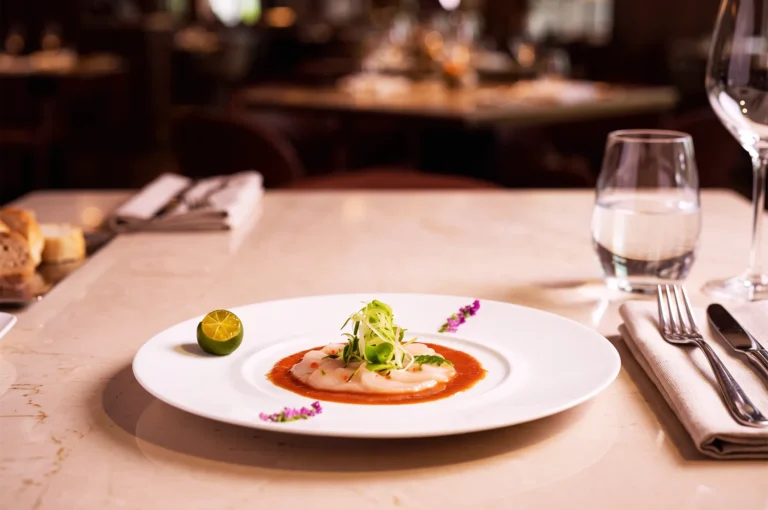
The pieces I remember most were the white fish. Shiro amadai, tilefish, was delicate and faintly sweet, the kind of flavor you’d lose entirely under a heavier hand. Kinki, or rockfish, arrived in a warm yuzu soup with a clear broth. There was a course of uni from Hamanaka in Hokkaido, delivered in seawater bags, with rock seaweed; it was strikingly creamy and its freshness came through at once. I also remember a sweet scallop, a touch of okra, and tuna so tender it barely needed the rice beneath it. Across other seasons you might find black throat sea perch, abalone, baby sea bream, tiger prawn, or Echizengani, a prized snow crab from Fukui Prefecture.
A few cooked dishes and a bowl of miso soup punctuated the progression, beginning with a small appetiser and ending with dessert, but the counter’s real vocabulary is quiet: toro maki, a whisper of freshly grated wasabi, a warm bowl of rice.
The Sushi Rice Matters Too
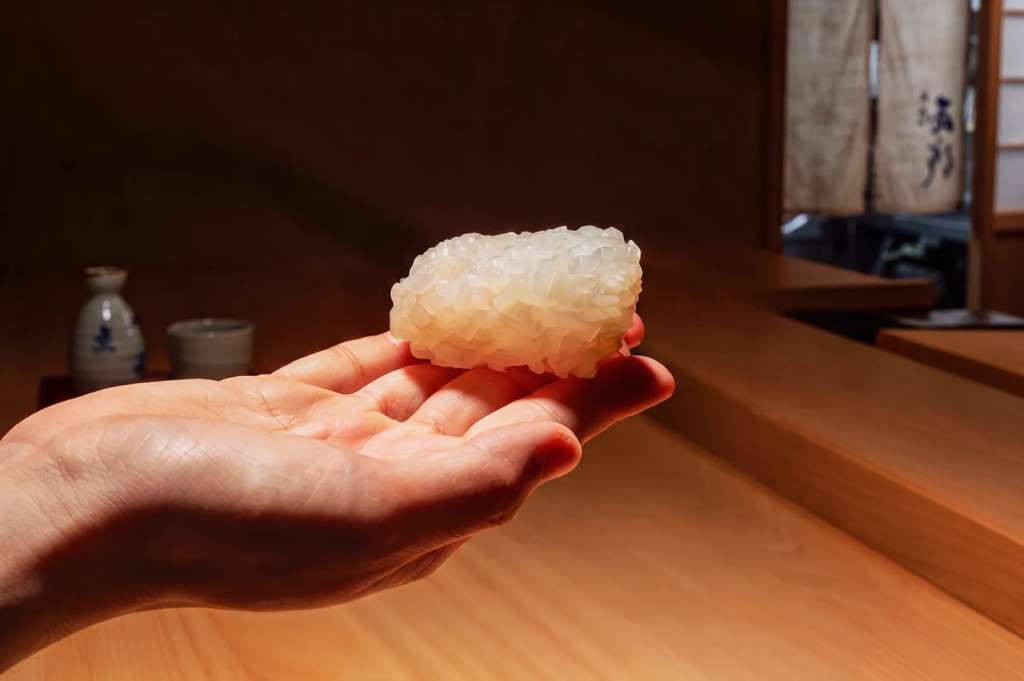
Here’s the thing most first-timers miss. Sushi isn’t only about the fish. Shoukouwa’s sushi rice is sourced from Yamagata and Ishikawa. The sushi rice does half the work, and Shoukouwa treats it with the same seriousness as the seafood.
Temperature and proportion change everything. Chef Nishida’s sushi making starts with a proprietary blend of rice from Shimane and Gifu, mixed in a specific ratio, then served slightly warm against cool fish with just enough salt to season and no more, sized so the grain never overwhelms the slice on top. When it’s right, the two arrive as one thing rather than two. This is where a premium counter earns its price, and it’s a good part of why serious diners keep returning. If you’re planning your first proper omakase, it helps to read a little about how a chef-led Japanese dining experience actually unfolds before you sit down. The result is a soft texture that reflects precise craft rather than forcing the rice and fish to stand apart.
Inside the Shoukouwa Counter
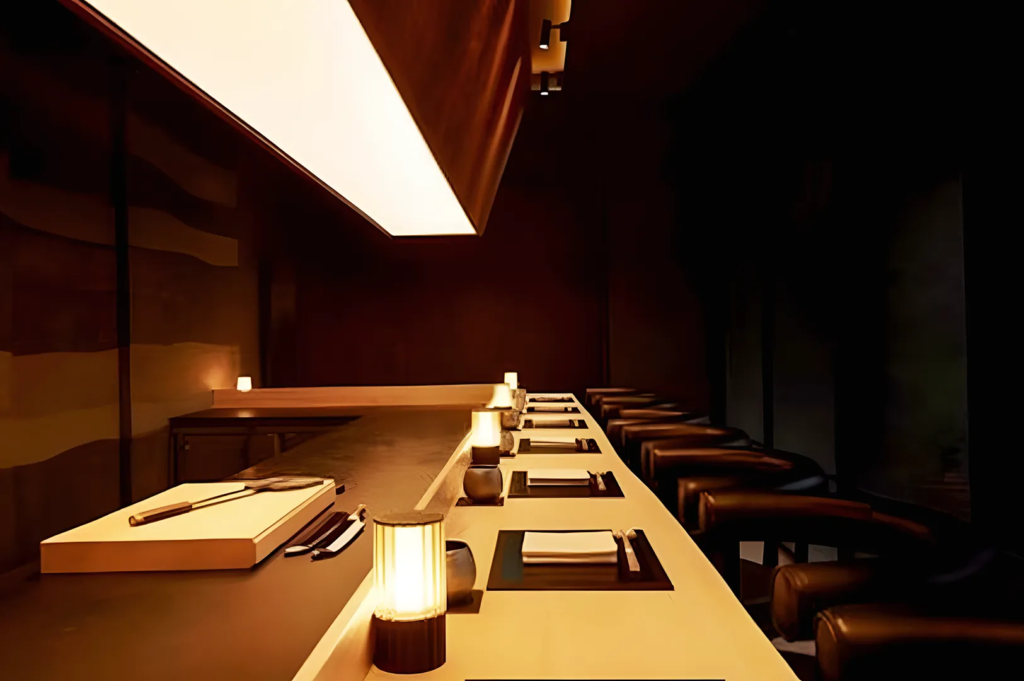
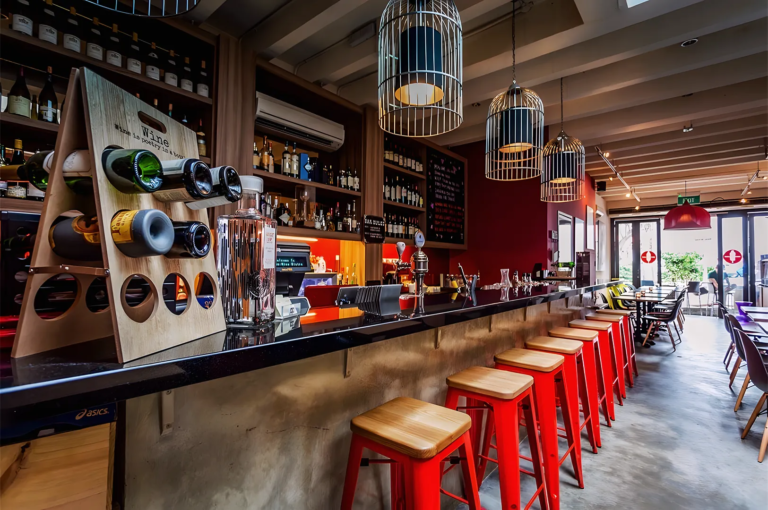
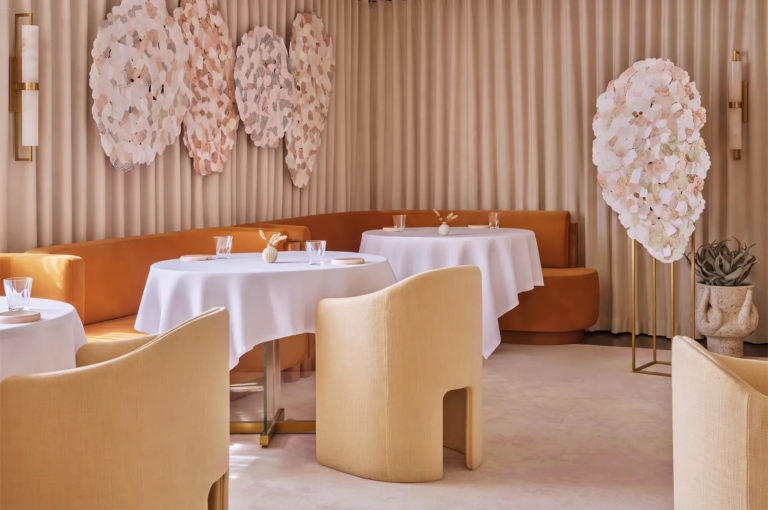
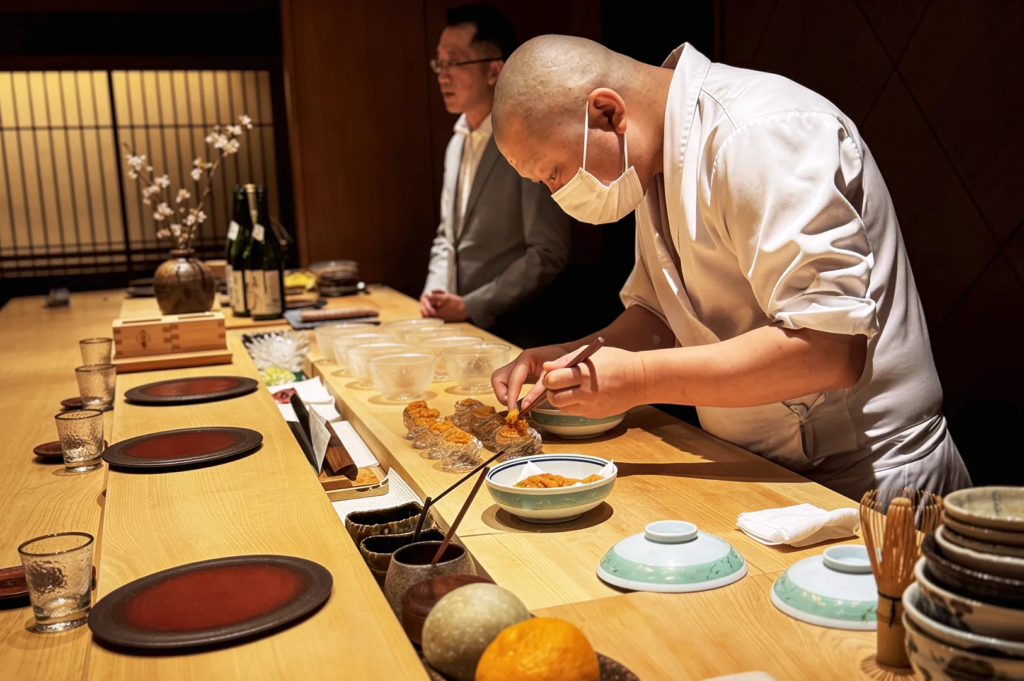
The two seating areas change your relationship with the meal: the main counter keeps everything in view, while the private dining room offers a more secluded setting. You’re not receiving plates from a hidden kitchen. You’re watching each piece built, sliced, and shaped an arm’s length away.
The room is intimate and quiet, more hushed than lively, which suits the food. A small bubbling water feature at the entrance and red Japanese stucco walls set the tone with a subtle hint of ceremony. One of the seating areas is framed by a sage-green wave-patterned wall and a bonsai alcove, which helps the space feel calm and composed. Service is warm without fussing, and genuinely knowledgeable, turning dinner into a fuller culinary experience for guests. The team is happy to talk through provenance and preparation, and the sake pairings are worth leaning on. Ask, and you’ll be pointed somewhere better than you’d have chosen alone.
Is Shoukouwa Worth Giving an Evening To?
Honestly, it depends on what you want. This is luxury dining, and the price is real.
Worth it if you care deeply about sushi, appreciate Edomae technique, want seasonal seafood you rarely see elsewhere, and enjoy the closeness of a counter. It’s a natural fit for a milestone.
Look elsewhere if you prefer casual sushi, want a theatrical modern tasting menu, or are chasing value over the craft. One caveat worth knowing: dinner runs two structured seatings, so the earlier slot can feel a touch time-conscious on busy nights. Book the later seating if you want to eat at a more relaxed pace and linger. For other special-occasion ideas, you can browse more of Singapore’s most memorable fine dining destinations for a milestone celebration.
Before You Sit at the Counter
- Address: 1 Fullerton Road, #02-02A, One Fullerton, Singapore 049213
- Nearest MRT: Raffles Place, roughly a 5–10 minute walk
- Hours: lunch Wednesday to Saturday from 12:30pm; dinner Tuesday to Saturday, two seatings at 6pm and 8:15pm
- Prices: Miyabi Lunch S$380++, Hana S$520++, En Dinner S$680++
- Booking: a credit-card guarantee is required; cancellation charges are S$350 per person for lunch and S$500 per person for dinner
- Dress code: smart casual
- Good to know: there’s a six-seat private dining room for smaller private occasions
Come unhurried, and let the chef set the pace.
Frequently Asked Questions
Is Shoukouwa good for a first omakase?Yes, especially if you already care about ingredient quality and the chef-and-guest talk at the counter. Just know it’s a traditional, restrained experience rather than a flashy one, with ginger or pickled radish sometimes acting as a quiet palate-cleansing counterpoint.
Do I need to book ahead?Absolutely. With only eight counter seats and a credit-card guarantee required, reservations are essential, particularly for weekends.