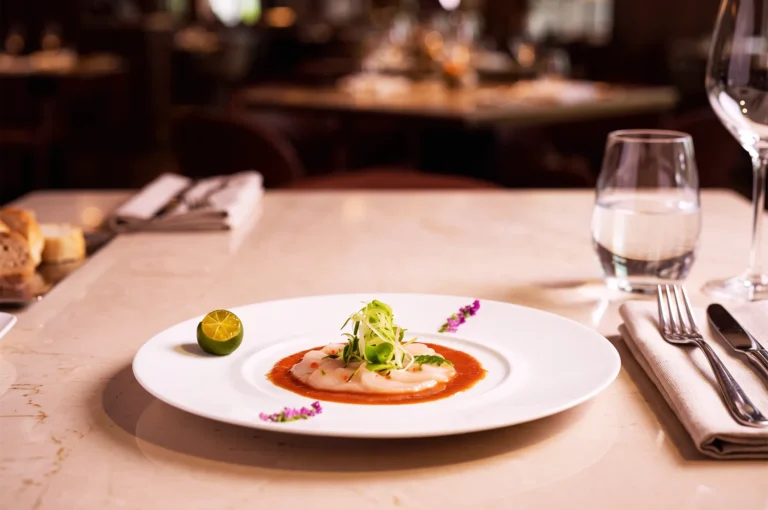
I did not notice when the water was poured.
That was probably the point.
I had been talking. Somewhere in the middle of the conversation, the glass had become half empty. A few minutes later, without interruption, it was full again.
No announcement.
No question.
Just a hand entering the edge of the table and disappearing.
The Things We Don't Ask For
There are parts of restaurant service that are easy to remember.
A dish explained at length.
A bottle presented before it is opened.
A birthday plate arriving unexpectedly.
But some of the most thoughtful gestures barely register while they are happening.
A napkin is replaced when someone leaves the table.
A chair is pulled back at precisely the right moment.
A server notices that the conversation has become serious and waits before approaching.
These gestures are small.
What makes them difficult is timing.
Paying Attention
Good service is sometimes described as attentive.
I think anticipation is closer.
Attention means noticing that something has happened.
Anticipation means understanding what might happen next.
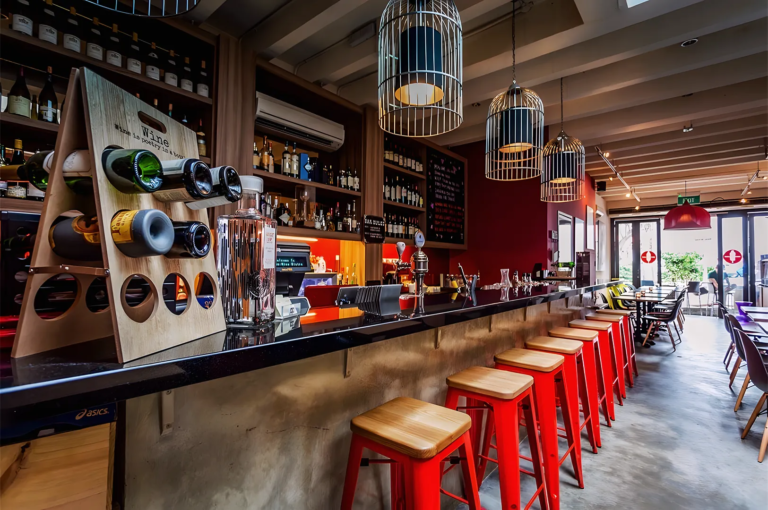
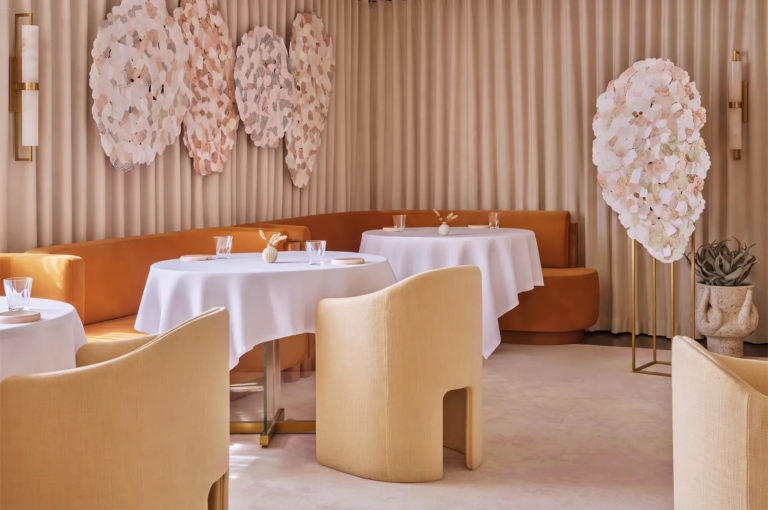
The distinction becomes clearer across the fine dining restaurants in Singapore where service can shape an evening as quietly as the cooking.
It is rarely about doing more.
Sometimes it is knowing when to do less.
The MICHELIN Guide's explanation of its Service Award offers an interesting formal perspective on this part of restaurant culture: service is recognised not simply for technical precision, but for the ability to make guests feel welcome and comfortable.
From the table, however, none of this feels formal.
It feels like someone noticed.
Reading A Table
Every table has its own rhythm.
One wants explanations.
Another wants privacy.
Some guests ask questions about every course. Others want the plate placed down with only a few words.
A good dining room seems to understand these differences without turning them into rules.
I once watched a server approach a table, slow down, then turn away.
The guests were deep in conversation.
Nothing needed to happen urgently.
A few minutes later, when the conversation naturally paused, the server returned.
The gesture lasted perhaps three seconds.
I remember it because nothing happened.
The interruption that could have occurred simply did not.
Invisible Work
We often associate craft with things we can see.
A chef's knife.
A finished plate.
A bottle opened carefully beside the table.
But there is another kind of craft in understanding a room.
Who needs something?
Who wants to be left alone?
Which table is ready for the next course?
Which one needs another ten minutes?
A dining room contains dozens of these decisions.
When they are made well, the evening seems effortless.
That effortlessness can be misleading.
Someone is always paying attention.
Before We Leave
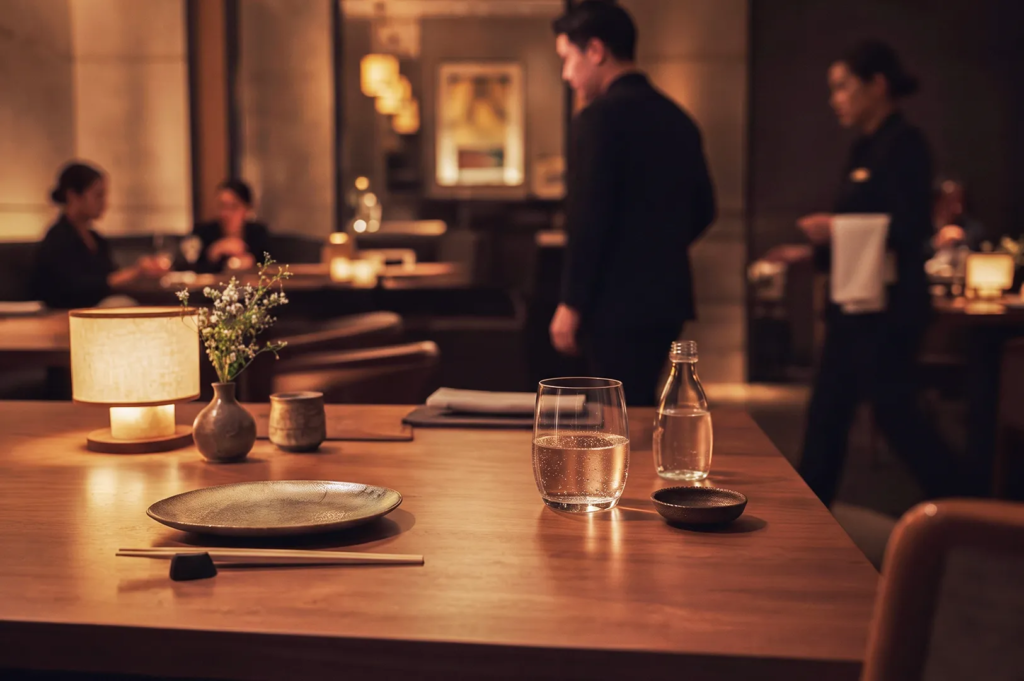
Near the end of dinner, the water glass is filled again.
This time I notice.
Perhaps because the room has become quieter.
Perhaps because there are fewer things left to arrive.
The server places the bottle down for a moment, pours, and moves toward another table.
It is an ordinary gesture.
One that has probably been repeated hundreds of times that week.
Soon, we ask for the bill.
Chairs move backwards.
We stand.
By the time I leave, I cannot remember how many times that glass was filled.
Only that it never seemed to become empty.