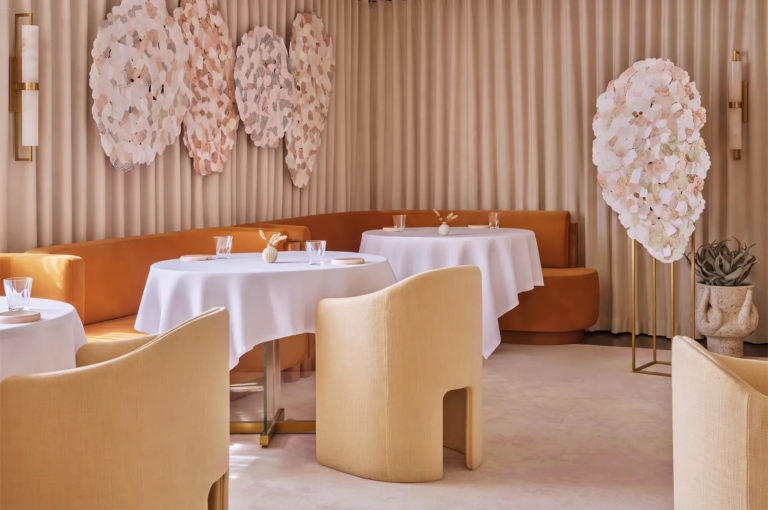
The dining room is often at its most revealing before anyone arrives.
No conversations. No cutlery touching plates. No footsteps approaching from the entrance.
Just a room waiting.
The chairs have been pulled into place. Glasses catch whatever afternoon light remains. Somewhere beyond the dining room, the kitchen has already started moving.
There is something about this hour that changes how I see a restaurant.
Before Dinner
We usually remember restaurants when they are full.
A table surrounded by friends. A birthday halfway through dessert. A bottle opened slowly. Someone leaning across the table to finish a story.
But before any of this, there is preparation.
A server notices that one chair sits slightly farther from the table than the others and moves it inward. A napkin is replaced because the fold is not quite right. A glass is held briefly toward the light before being returned to its place.
None of these gestures will become the story guests tell afterwards.
Perhaps that is precisely why they matter.
Good hospitality often begins with things we were never supposed to notice.
The Work Behind Stillness
Fine dining rooms can appear effortless once service begins.
That effortlessness is carefully constructed.
I have noticed it in many of the places that shaped my understanding of fine dining in Singapore. The restaurants may differ in cuisine, formality and personality, but the quiet before service often feels strangely familiar.
There is repetition behind it.
Glasses polished every evening.
Tables checked again.
Cutlery aligned.
Menus placed down, lifted, then adjusted by a few centimetres.
In the kitchen, another kind of repetition is taking place. Knives move across chopping boards. Sauces are tasted. Ingredients are portioned. Plates wait in stacks beneath the lights.
These movements have been performed hundreds, perhaps thousands, of times.
Yet tonight they begin again.
A Table Is Never Really Empty
I once watched a dining room being prepared and realised that an empty table does not feel empty for very long.
Someone has already imagined the people who will sit there.
Two glasses instead of four.
A chair moved to make the passage beside it easier.
A note about an anniversary quietly passed between members of the team.
Long before the guests know where they are sitting, the restaurant has begun thinking about them.
This is an unusual kind of care because much of it disappears once it succeeds.
The guest sees a table.
Not the person who checked it.
They see a glass.
Not the hand that polished it.
They sit down without knowing how many small decisions made that moment feel natural.
When The Room Changes
Then the first guests arrive.
The transformation is almost immediate.
A chair moves away from the table. A handbag is placed beside another. Water is poured. The first conversation settles into the room.
Soon, the stillness is gone.
And that is the point.
Restaurants are prepared so carefully only to be disturbed.
Napkins unfold. Plates arrive and disappear. Wine levels fall slowly in glasses. Crumbs gather where the table had been spotless an hour earlier.
The room begins collecting evidence that people have been there.
Perhaps this is why I like seeing restaurants before service.
For a short while, everything exists in possibility.
There are dinners that have not happened yet.
Conversations waiting to begin.
Occasions nobody in the room knows will become memories.
What Remains
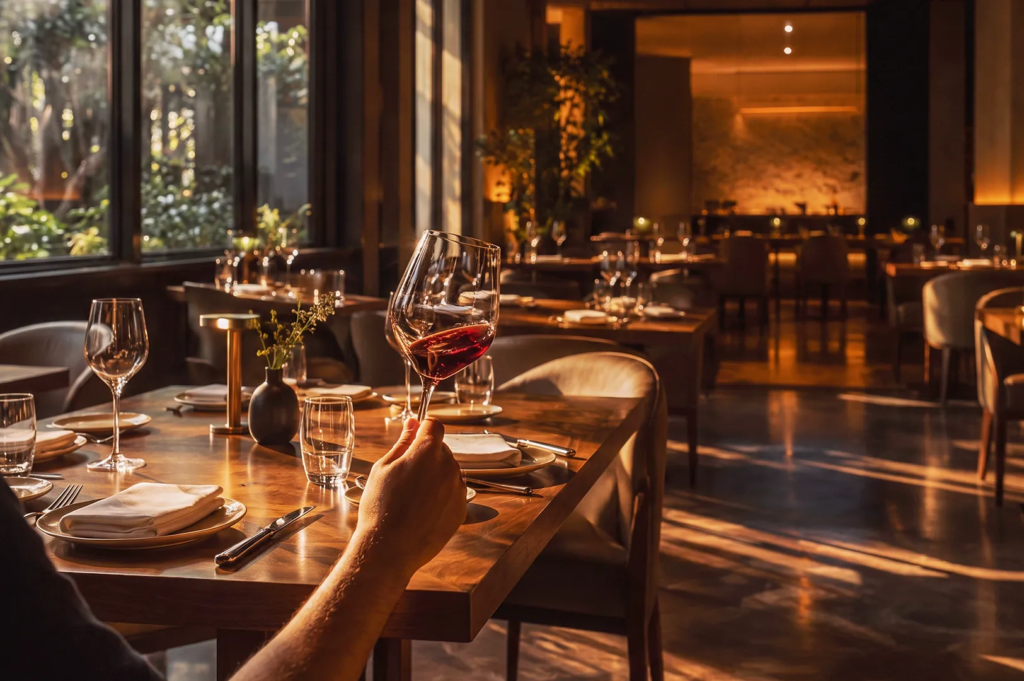
Later that evening, the dining room will empty again.
Chairs will be returned.
Glasses collected.
Tables cleared until little remains of the people who occupied them.
By tomorrow, another group will sit in the same places and create entirely different evenings.
Restaurants live inside this repetition.
Prepare.
Welcome.
Clear.
Begin again.
Before the doors open, there is a brief moment when all of this seems visible at once.
The room is quiet.
One last glass is adjusted.
Then someone walks toward the door.