Dessert has disappeared.
The spoons have been taken away.
There is nothing else coming.
And suddenly, nobody is in a hurry.
I have often wondered why this part of dinner feels different.
For most of the evening, something has been happening.
A dish arrives.
A plate is cleared.
Wine is poured.
Someone explains an ingredient.
Then the sequence ends.
What remains is simply the table.
When The Restaurant Stops Asking For Your Attention
A long dinner has structure.
This is particularly noticeable across Singapore's fine dining restaurants, where tasting menus can give an evening a deliberate rhythm.
One course follows another.
The table keeps changing.
There is always a small sense of anticipation about what might appear next.
Then dessert arrives.
Eventually, even that plate disappears.
The evening becomes strangely open.
Nothing else requires your attention.
And conversation changes.
The Part Nobody Plans
This may be my favourite part of a long dinner.
Nobody booked the restaurant specifically for these twenty minutes.
There is no course dedicated to them.
They appear only because nobody has stood up yet.
Someone finishes the last sip of wine.
A conversation that began three courses earlier returns.
The room has become quieter without anyone noticing.
There is a peculiar luxury in having nowhere else to be.
Even advice from MICHELIN Guide inspectors on how to approach fine dining touches on the importance of appetite, pacing and choosing an experience that suits the diner rather than treating the meal as a rigid exercise.
Perhaps that is what these final minutes offer.
No performance.
No expectation.
Only time.
Look Around Now
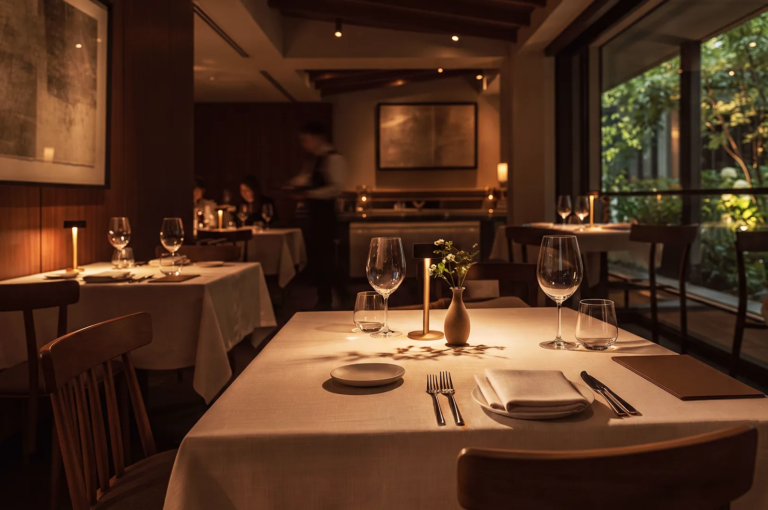
The dining room looks different at the end of an evening.
Earlier, everything was prepared.
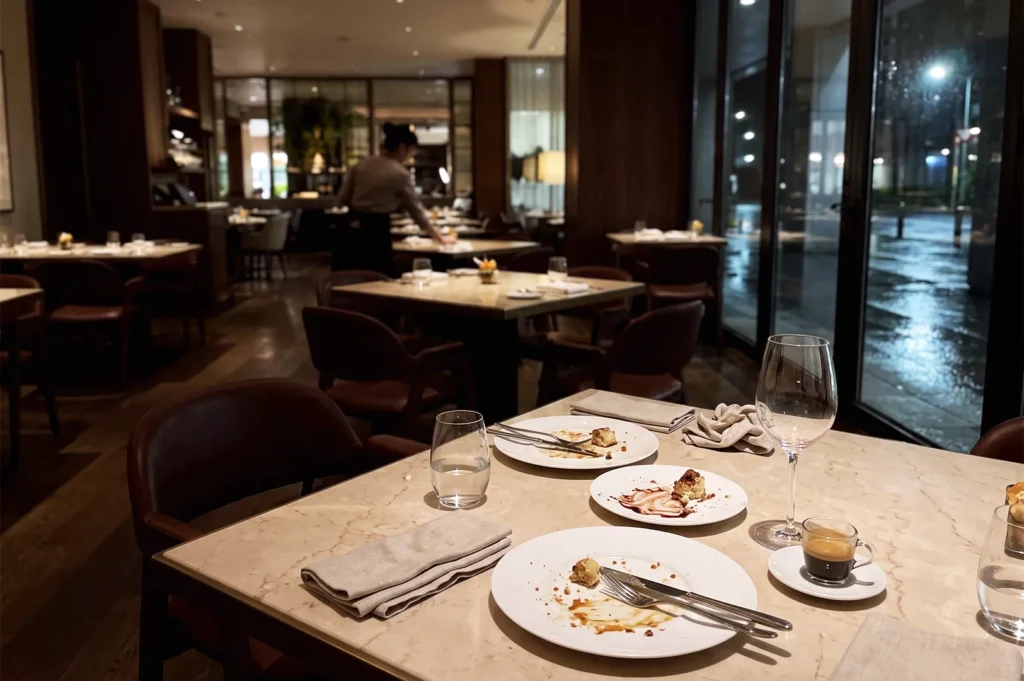
Now there is evidence everywhere.
Napkins rest loosely beside plates.
Water glasses are nearly empty.
Wine bottles stand lighter than when they arrived.
A chair may have moved slightly closer to another.
At a nearby table, someone is laughing.
Another couple has already left.
The restaurant is beginning its slow return to silence.
You can see it happening.
What We Actually Remember
Ask me about a dinner months later and I may struggle to describe every course.
The details blur surprisingly quickly.
But I might remember what happened afterwards.
Walking outside and discovering it had rained.
Standing near the entrance finishing a conversation.
Looking at the time and being surprised by how late it had become.
Perhaps meals remain with us this way because memory is not particularly interested in preserving menus.
It keeps fragments instead.
A voice.
A light.
A sentence.
The last people in the room.
Nothing Else Is Coming
Eventually someone asks for the bill.
The spell breaks gently.
Cards appear.
Chairs move backwards.
Belongings are gathered from beneath the table.
Soon the restaurant will clear everything away and prepare to begin again.
But there is a brief period after dessert when none of this has happened yet.
The meal is technically finished.
The evening is not.
There is nothing left to taste.
Nothing left to photograph.
Nothing left to wait for.
And perhaps that is exactly why we finally begin paying attention.