The sommelier pours a small amount of red wine into the glass.
The guest lifts it.
Looks at the colour.
Moves the glass gently in a circle.
Then brings it closer to their nose.
For a few seconds, nobody speaks.
It is a familiar ritual in fine dining restaurants, one that can seem unnecessarily elaborate to someone watching for the first time.
Why not simply take a sip?
Why spend so much time looking at something that is meant to be drunk?
Perhaps because wine tasting is not only about flavour.
It is also about learning to pay attention.
Why Do We Swirl Wine Before Tasting It?
There is a practical reason behind the movement.
Wine contains aromatic compounds that contribute to its distinctive smell and flavour.
When the glass is swirled, more of these compounds can escape into the air, making certain aromas easier to detect.
Swirling helps release aromas into the space above the wine, where they can be detected by the nose.
But there is something interesting about the movement itself.
It is small.
Deliberate.
Almost unnecessary to someone who is simply waiting for dinner.
Yet it changes the way a person approaches the glass.
Instead of drinking immediately, they pause.
They look.
They smell.
They begin noticing details that might otherwise pass unnoticed.
Is Wine Tasting Really About Knowing the Right Words?
At a fine dining table, wine can sometimes feel intimidating.
A sommelier describes notes of cherry, citrus, oak or spice.
Someone nods.
Another guest takes a sip and wonders whether they are supposed to recognise the same things.
There is a quiet pressure to understand.
To identify the grape.
To know the region.
To say something intelligent about the wine.
But perhaps the most enjoyable way to approach wine is with curiosity rather than expertise.
One person might notice something floral.
Another might find the same wine slightly earthy.
Someone else may simply enjoy its freshness.
The experience does not become less meaningful because the vocabulary is different.
Wine tasting can be personal without becoming a test.
What Does a Sommelier Notice That We Don't?
Watch a sommelier during dinner and much of their work happens between the obvious moments.
They are not constantly opening bottles.
Sometimes they are simply watching.
A guest finishes a course.
A glass is moved aside.
Someone takes a final sip before the next dish arrives.
The sommelier approaches, perhaps with another wine.
The timing matters.
At some of the best fine dining restaurants in Singapore, wine service is part of the rhythm of the meal rather than a separate performance.
A pairing may be poured shortly before a dish arrives.
An explanation may be brief, allowing the food and wine to speak for themselves.
A guest might ask a question, beginning a conversation about a region or grape variety.
The sommelier's knowledge is important.
But so is knowing how much of it to share.
The most thoughtful service makes curiosity feel welcome.
Why Does the Same Wine Feel Different Throughout Dinner?
A glass of wine does not always seem identical from the first sip to the last.
Temperature changes.
Exposure to air can affect its aromas.
The food being eaten can also change how its flavours are perceived.
A wine that initially seems sharp may feel softer alongside a particular dish.
Another may become more expressive as it warms slightly in the glass.
These changes invite a different kind of attention.
Instead of deciding whether the wine is good after one sip, there is an opportunity to return to it.
Taste again.
Notice something new.
Perhaps change your mind.
There is no need to rush toward a conclusion.
Can a Glass of Wine Teach Us to Slow Down?
There is something almost contradictory about wine service in a busy restaurant.
Around the dining room, everything is moving.
Servers carry plates.
Chefs prepare the next courses.
Conversations overlap.
Yet at one table, someone is holding a glass completely still.
Looking at the colour.
Considering the aroma.
Taking a small sip.
The moment lasts only a few seconds.
But it asks for a kind of attention that ordinary evenings rarely demand.
Perhaps that is what makes the ritual interesting.
It is not simply about understanding wine.
It is about noticing something before it disappears.
What Remains After the Last Glass?
Near the end of dinner, the table begins to empty.
The final plates have been cleared.
The wine glasses remain.
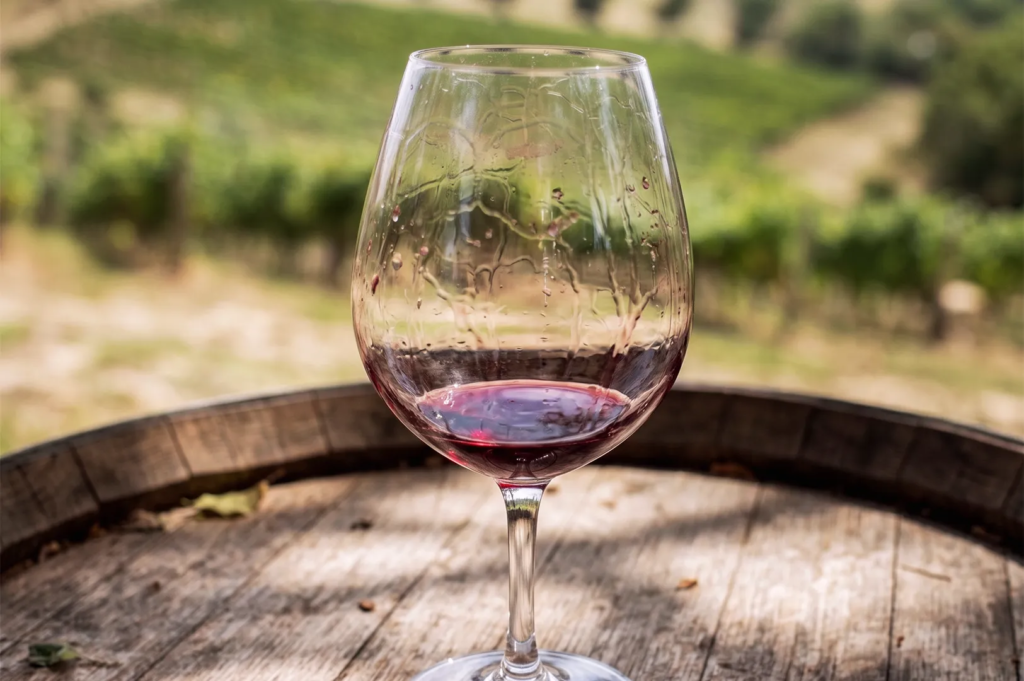
One contains a small amount of red wine, catching the reflection of a nearby lamp.
Someone lifts it.
There is no explanation this time.
No discussion about the grape or vintage.
No attempt to identify another aroma.
Just a final sip.
The glass returns to the table.
Soon, it will be collected, polished and prepared for another evening.
The wine itself will be forgotten by some guests.
Others may remember the bottle for years.
But perhaps what stays is something quieter.
The small pause before drinking.
The movement of the glass.
The unexpected pleasure of noticing something that was there all along.