Why would anyone choose eight small dishes over one satisfying main course?
I asked myself that question long before I ever booked a tasting menu. It seemed like an elaborate way to make dinner more complicated. You give up the pleasure of choosing and hand the evening to someone else.
Over time, I’ve come to see it differently. The best tasting menus aren’t about eating more dishes in smaller portions. They’re about watching a chef build a complete meal one deliberate step at a time. Once you understand the thinking behind it, the format starts to make a lot more sense. When you’re ready to explore further, read more here for our favourite fine dining tables in the city.
What Is a Tasting Menu?
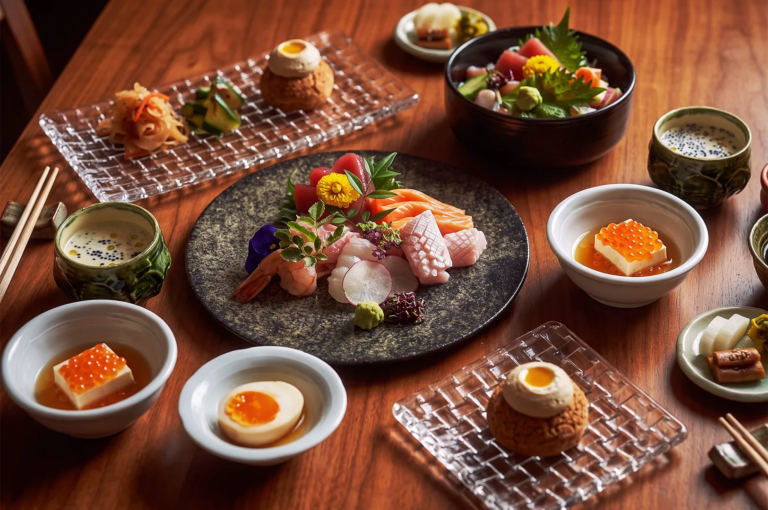
So, what is a tasting menu? It’s a planned sequence of dishes, served in smaller portions, that lets you experience several sides of a chef’s cooking in a single meal.
Instead of picking a starter, main and dessert from an à la carte list, you receive a series of courses chosen by the kitchen. The menu might highlight seasonal ingredients, signature techniques or a personal idea about cuisine.
A tasting menu is technically a kind of set menu, but the two aren’t the same thing. A three-course lunch special is a set menu. A tasting menu is usually longer and more intentional, with each course placed for a reason.
It also differs from omakase. Both are chef-led, but omakase is rooted in Japanese dining and often changes in the moment. A tasting menu tends to be designed in advance. If counter dining appeals, our omakase guide is a natural next step: https://unrushedtables.com/best-omakase-in-singapore-7-counters-worth-sitting-down-for/
Why Fine Dining Restaurants Serve Food in Courses
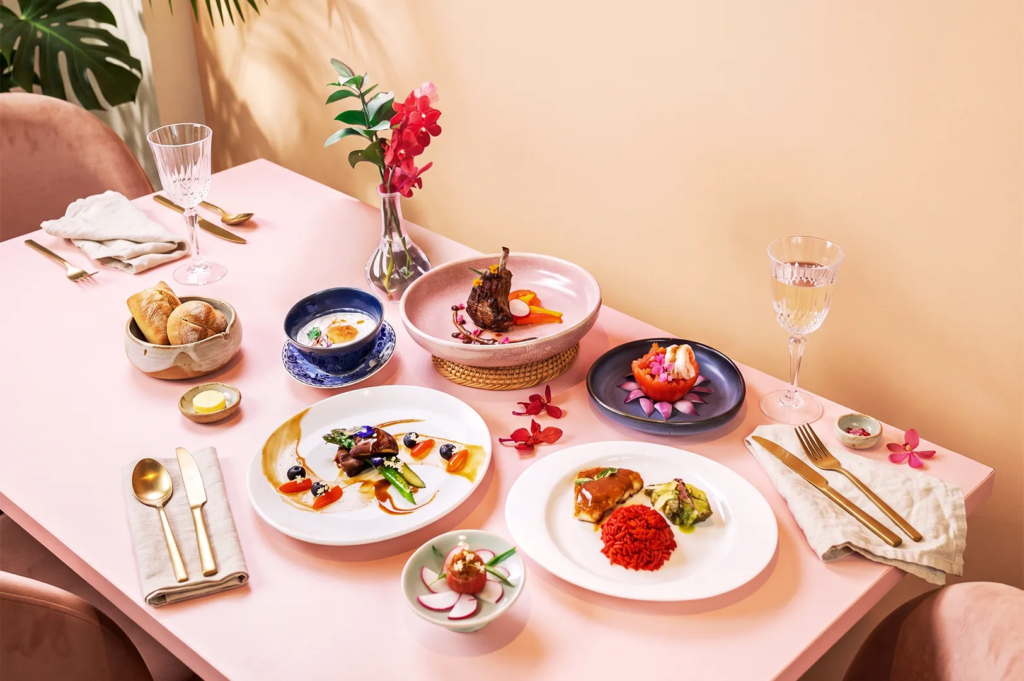
This is the heart of it. Serving food one course at a time gives a kitchen control that a single plate never could.
It creates a progression of flavours. A meal might open with something light and delicate, then build toward richer dishes before resetting with desserts. Not every chef follows that arc, and some deliberately play with contrast, but the order is always a choice, creating more variety along the way.
It shows range. One main course can only reveal so much. Across several courses, a chef can showcase range and culinary vision through curing, roasting, steaming, fermentation and sauce work, each one adding something new.
It follows the seasons. Many restaurants rewrite their menus as produce changes, which keeps the experience fresh for returning guests. A tasting menu is usually longer and more intentional, with each course placed for a reason. The modern format became especially prominent in the 1990s.
It controls timing. Each dish arrives at its intended temperature, plated at the right moment, rather than cooling while you work through a crowded table. Those small courses also provide room for more thoughtfully crafted combinations.
It tells a story. This is what I find most compelling. A good tasting menu experience keeps diners engaged from beginning to end, with changing flavours and textures that feel like chapters in a book rather than a pile of unrelated plates.
Singapore shows this beautifully. At Odette, Julien Royer pairs refined French technique with subtle Japanese touches. At Cloudstreet, Rishi Naleendra draws on his Sri Lankan roots in a restored Amoy Street shophouse. Jaan by Kirk Westaway reimagines modern British cooking 70 floors above the city. Meta channels Sun Kim’s Korean heritage through seafood and vegetables. Labyrinth reworks Singaporean classics like chilli crab and laksa, while the intimate Seroja explores the flavours of the Malay Archipelago. Same format, entirely different voices. That’s where the creativity lives.
How a Tasting Menu Experience Works
Every restaurant has its own rhythm, but most fine dining menus follow a familiar shape designed to present the chef’s ideas clearly across the meal:
- Arrival. Staff welcome you, often confirm any dietary needs, and may outline optional beverages curated for each course, usually complemented by wine or non-alcoholic options.
- Amuse-bouche. A small opening bite that introduces the chef’s style through careful presentation.
- Opening courses. Lighter dishes that ease you in.
- Middle and main courses. More substantial plates, often fish or meat.
- Pre-dessert. A palate cleanser, if the menu includes one.
- Dessert. Sometimes two.
- Petit fours. Small sweets with coffee or tea.
One detail worth knowing: restaurants count courses differently. Bread, snacks and petit fours may or may not be part of the advertised number. An “eight-course” menu at one place may hold the same amount of food as six courses somewhere else. A full multi-course meal often takes two to three hours or longer.
How Much Does a Tasting Menu Cost in Singapore?
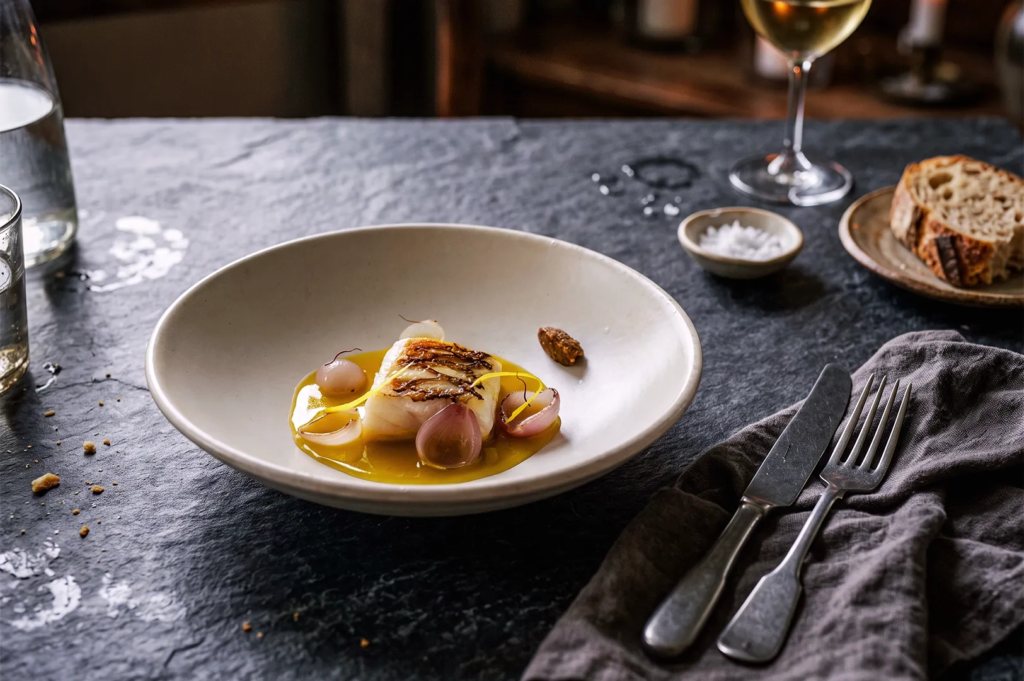
Prices for a tasting menu in Singapore vary widely. As a rough guide, accessible lunch menus can start around S$60 to S$120, mid-range menus often sit between S$120 and S$200, and premium experiences can run well beyond S$350 per person. Treat these as loose bands, not promises of quality, and note that some restaurants offer pairings at an additional priced cost per person.
A few current examples help:
- Restaurant Labyrinth: Lunch Menu S$208++, Chef’s Tasting Menu S$288++
- Odette: Delight (4-course lunch) S$288++, Indulgence (6-course lunch) S$468++, Épicure dinner S$498++
That “++” matters. It means a 10% service charge is added, and then 9% GST is calculated on the subtotal, including the service charge. Here’s how the real cost looks per person:
| Labyrinth Lunch | Odette Delight | Odette Épicure | |
|---|---|---|---|
| Menu price | S$208.00 | S$288.00 | S$498.00 |
| 10% service charge | S$20.80 | S$28.80 | S$49.80 |
| Subtotal | S$228.80 | S$316.80 | S$547.80 |
| 9% GST | S$20.59 | S$28.51 | S$49.30 |
| Total per person | S$249.39 | S$345.31 | S$597.10 |
That’s before beverages, since wine pairings are usually charged separately from the menu. A wine pairing, cocktails, or a non-alcoholic pairing can change the final bill dramatically, so I always budget from the total rather than the headline price.
Will a Tasting Menu Actually Fill You Up?
This is the most common worry I hear, and it’s fair. Photos of tiny portions on oversized plates don’t exactly promise a satisfying dinner.
In my experience, most tasting menus are developed to provide a complete meal. Snacks, bread, several savoury courses and dessert can fill you up through cumulative variety rather than large portions. More often, the risk is leaving too full rather than too hungry.
That said, portions vary between restaurants. Course count alone won’t tell you much. If you’re unsure, look at the full menu or simply ask the restaurant how substantial it is.
Tasting Menus vs À La Carte
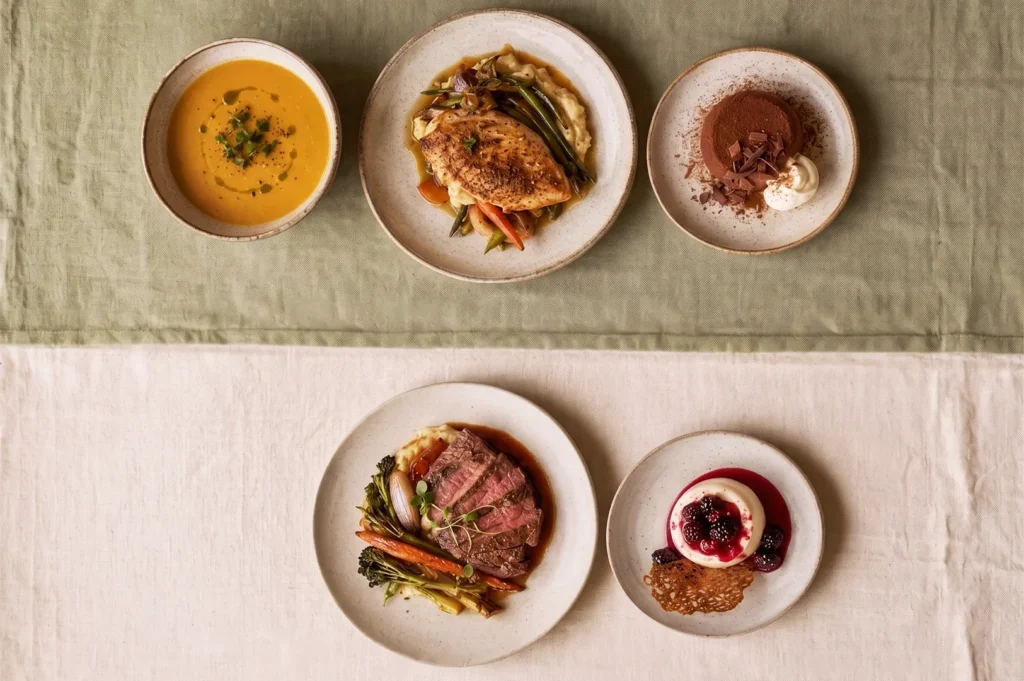
Neither is better. They simply serve different moods.
À la carte gives you control. You order what you love, in the quantity you want. A tasting menu gives you breadth and can show more of the chef’s style across a single evening. You see how the kitchen thinks across an entire evening.
One of my favourite pieces of advice comes from MICHELIN Guide inspectors. They compare the à la carte and tasting menu to see how much the dishes overlap. If the tasting menu includes something unique that expresses the chef’s personality and creative inspiration, they go for it. Sometimes, though, the à la carte holds the gems.
They also suggest choosing menu length by appetite. Some days call for a short menu. Others feel made for the full experience, and the format is ideal when you want to explore the kitchen’s full range rather than pick individual plates.
What to Know Before Booking
A little preparation makes the whole dining experience smoother for diners.
- Share dietary restrictions early. Some kitchens can adapt, while others can’t. Labyrinth, for example, is seafood-centric and lists several dietary needs it cannot accommodate. Odette currently cannot cater to dairy allergies.
- Read the cancellation policy. Odette’s deposits are non-refundable, and changes must be made at least 72 hours ahead.
- Check the dress code. Smart casual is a safe starting point. Odette asks gentlemen to wear trousers and appropriate footwear.
- Allow enough time. Labyrinth suggests about 2.5 hours for lunch and 3 hours for its Chef’s Tasting Menu, which also makes it a good fit for business dinners or celebrations. Don’t book theater tickets straight afterward.
- Ask questions. Curiosity about ingredients or technique is welcome, and some chefs or servers may present dishes directly to guests when service allows. Just pick a moment when the team isn’t mid-service.
- Pace yourself. If courses feel rushed, a good restaurant will happily slow down. Some venues also use an open kitchen format, so you can watch the team at work and interact more closely.
Is a Tasting Menu Worth It?
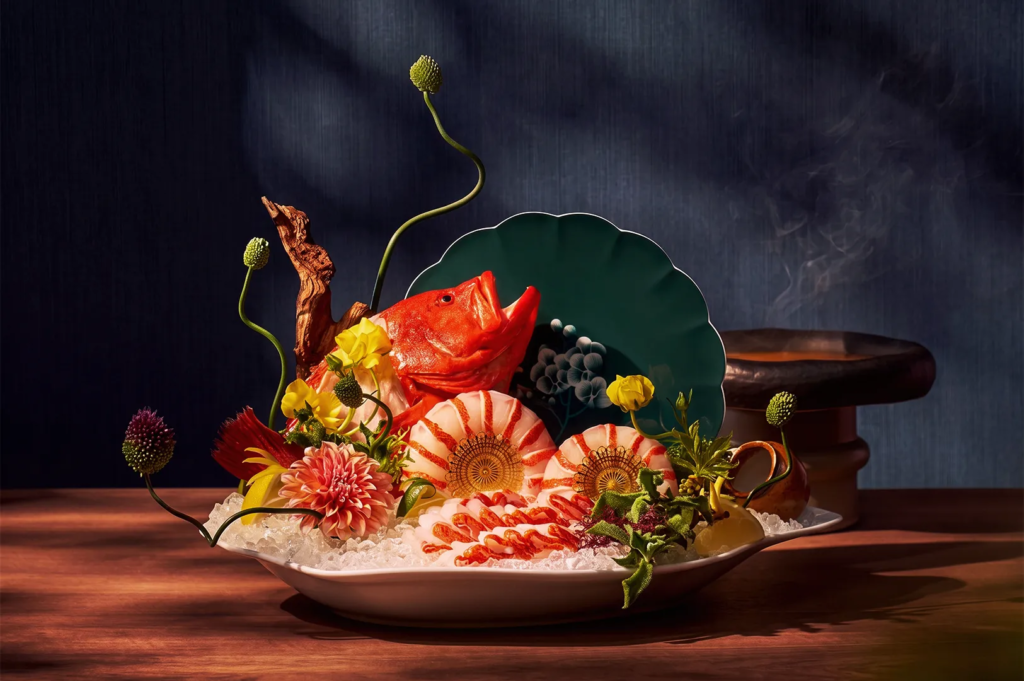
Honestly, it depends on what you’re hoping for.
If you enjoy discovery, seasonality and watching a chef’s vision unfold, a tasting menu can be one of the most memorable meals you’ll have, giving individuality room to shine over the course of the meal. For food lovers, it’s often a natural fit for special occasions or any dinner where you want the experience to feel thoughtfully paced from first course to last.
If you prefer familiar favourites or a quick dinner, à la carte may suit you better.
My advice mirrors the inspectors’ own: start where you’re comfortable. Choose a cuisine you already enjoy, and consider lunch first. It’s often shorter, lighter on the wallet and a smart way to sample the pinnacle of chef-led dining without committing to the longest dinner format.