Shinji by Kanesaka is a traditional Edomae sushi restaurant at The St. Regis Singapore, where Head Chef Keiichi Kobayashi leads an omakase experience rooted in Japanese technique and seasonal ingredients. The St. Regis lobby has its own grandeur: high ceilings, polished stone and the soft hush of a grand hotel. Then you sit down at the counter, and everything narrows. At Shinji by Kanesaka, very little competes for your attention. The fish, the rice and the hands shaping them carry almost the entire conversation.
Shinji is a gracious choice for clients seeking traditional omakase for milestone celebrations or polished business dinners. It’s also a confident first step into serious omakase. Its pleasures are subtle, so diners drawn to experimental plating or a lively room rather than a casual sushi dive may be happier elsewhere. For a wider view, explore these chef-led Japanese counters worth slowing down for.
The Shinji by Kanesaka Philosophy
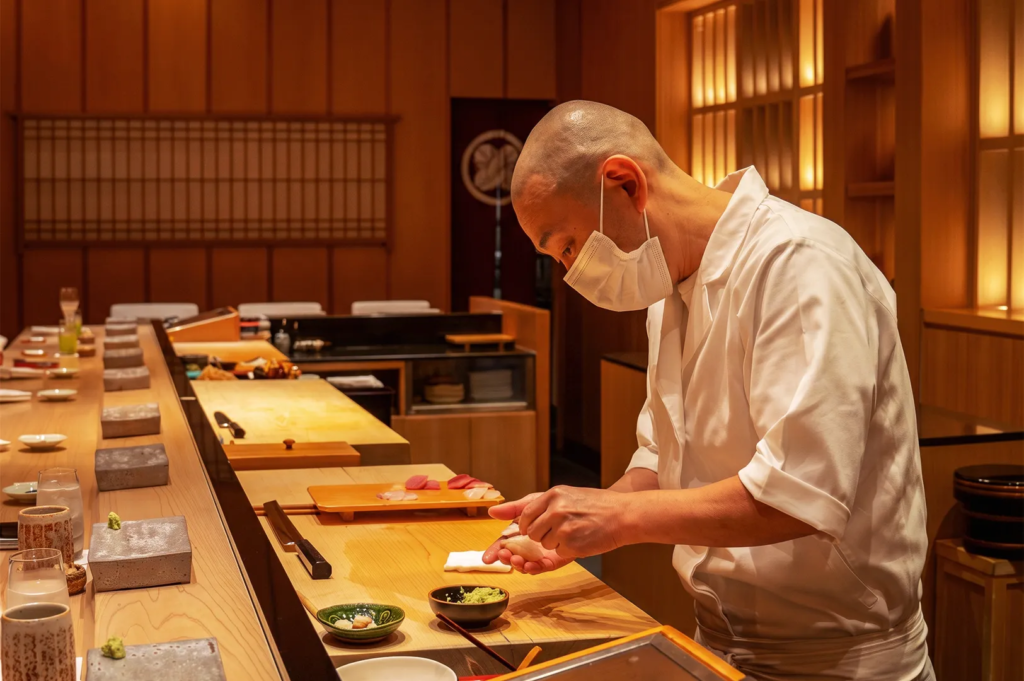
Shinji by Kanesaka Singapore traces its lineage to Chef Shinji Kanesaka, trained under legendary sushi masters before opening his restaurant. Its kitchen is led by Chef Keiichi Kobayashi, an Osaka native who refined his craft in Tokyo and brings more than two decades of training in traditional Japanese cuisine.
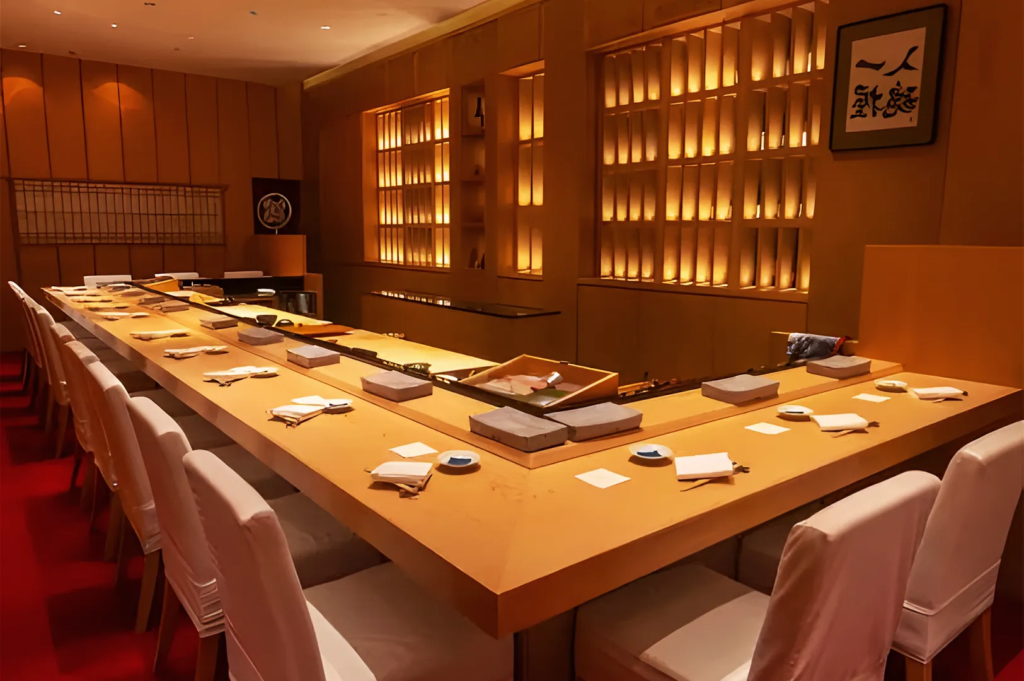
The restaurant describes its approach through kata (form) and do (the path of mastery), reflecting the artistry of a sushi shokunin dedicated to making each gesture more perfect. That fits what you see at the counter. The space was designed by Junzo Irikado. The interior uses organic materials flown in from Japan, with that attention to detail visible in the hand-woven ceiling. This is classic Edomae sushi, and it makes no attempt at reinvention. Its difficulty lies in doing familiar things exceptionally well.
From Raffles Hotel to Carlton Hotel, Then Back to One Singapore Home
Shinji by Kanesaka first opened in Singapore at Raffles Hotel in 2010 before expanding to The St. Regis Singapore in 2014. In 2017, the original Raffles Hotel outlet relocated to Carlton Hotel. Following the closure of the Carlton Hotel outlet in April 2025, Shinji consolidated its Singapore operations at The St. Regis, where it continues to operate today.
The Omakase Menu: A Progression, Not a Catalogue
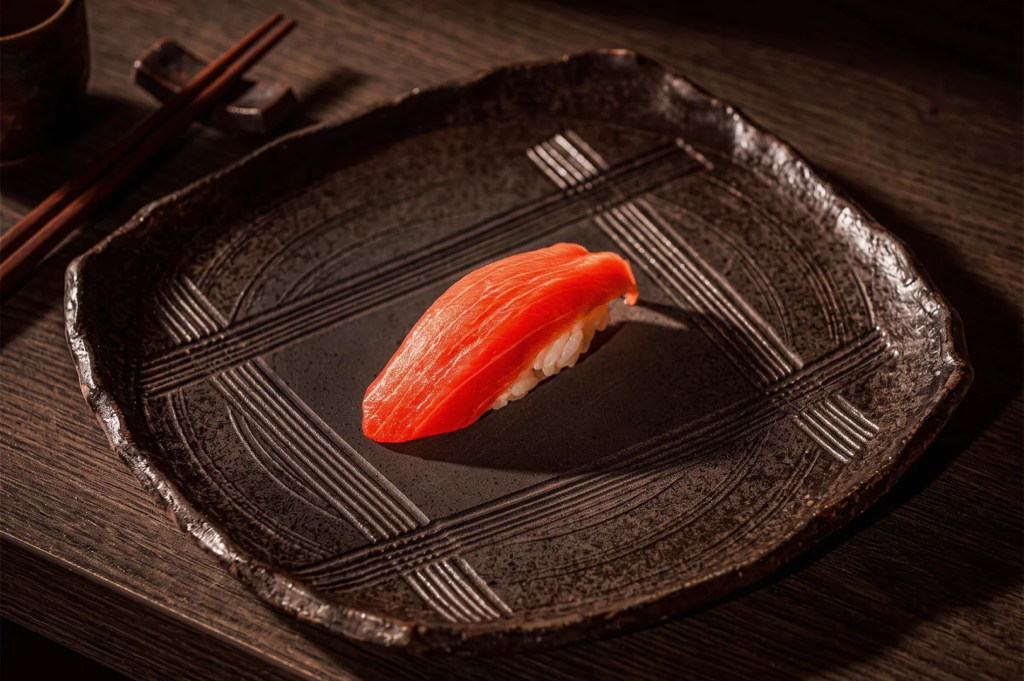
The omakase menu is a recognized omakase dining experience built around seasonal availability and the chef’s judgment, so no two visits are identical. What stays constant is the structure: a seasonal appetizer, sashimi, cooked dishes, nigiri, soup and Japanese fruit.
- Lunch sushi sets: Tsuki, S$150; Yuki, S$200.
- Lunch omakase: Omakase Yume, S$280; Chef’s Omakase Special, from S$350.
- Dinner sushi set: Sushi Edomae, S$250.
- Dinner omakase: Omakase Wa, S$350; Omakase Shin, S$480; Chef’s Omakase Special, from S$550.
For a first visit, I’d suggest the S$280 Omakase Yume at lunch. It offers the full arc of the experience without starting at the top tier, and the prices make these curated set menus easy to compare by time of day. The premium seafood is sourced with food quality in mind, with selections flown in from Japan.
The pieces that linger are often the quietest, a highlight of how ingredients are chosen by season. The tuna arrives rich, its fat yielding gently on warm rice, and the uni tastes sweet and clean. The chawanmushi is delicate and beautifully balanced, a reminder that the meal goes well beyond raw fish. Then there is the tamago, impossibly smooth and uniform in color, alongside standout items that reflect seasonal fish and minimalist elegance in presentation. It’s a humble piece, treated with extraordinary care.
The Rice Is Part of the Story
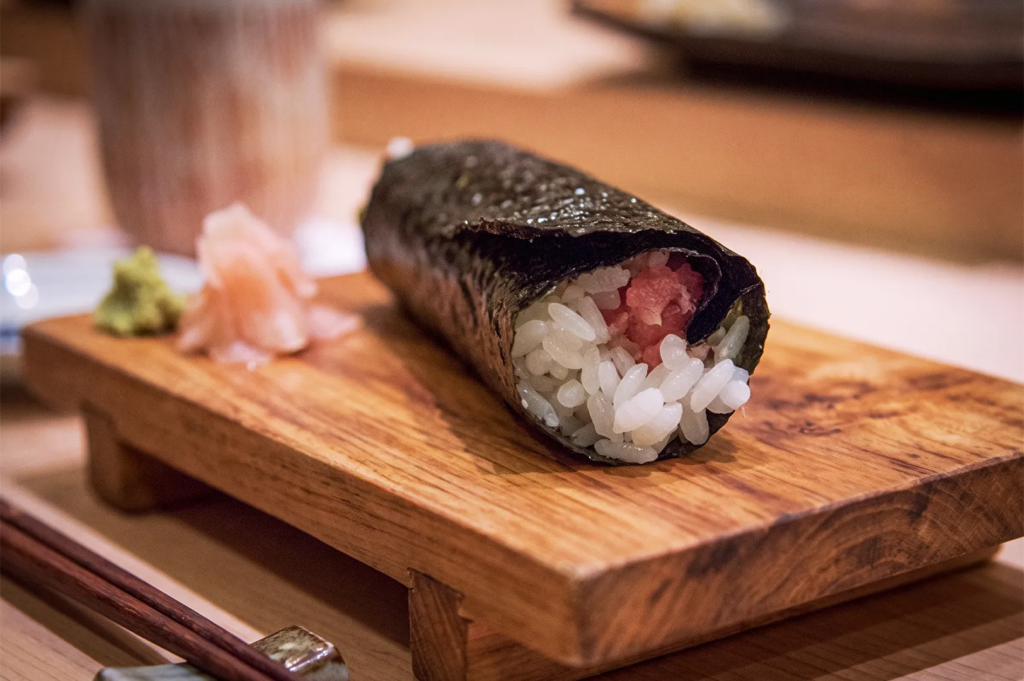
Most first-timers focus on the fish. Spend a little longer at the counter, and your attention drifts to the shari.
At Shinji, the rice is served warm and lightly seasoned, balanced so precisely that soy sauce feels unnecessary. It holds together just long enough to reach your mouth, then loosens. Fish, rice, temperature and timing work as one. Each piece is meant to be eaten within moments of being placed before you, so it’s worth resisting the urge to photograph it first.
Service in the Spirit of Omotenashi
The room is calm and formally elegant, best suited to quiet conversation. The service follows omotenashi, Japanese hospitality that anticipates rather than interrupts. Plates are cleared between courses and tea is quietly refreshed so it stays hot. You rarely notice the care until you realize you never had to ask.
The tone here is composed rather than playful. Diners who prefer banter with the chef may find it reserved. Those who value ceremony will find it reassuring.
Before You Visit Shinji by Kanesaka St Regis
- Address: The restaurant is located at The St. Regis Singapore lobby floor, 29 Tanglin Road, Singapore 247911.
- Getting there: The hotel sits along leafy Tanglin Road, just beyond the bustle of Orchard. Parking and valet service make arriving by car effortless. This Singapore outpost is an extension of the original Ginza restaurant in Tokyo’s exclusive Ginza district.
- Hours: Monday to Saturday. Lunch is served 12–3pm and dinner 6–10:30pm. Closed Sunday.
- Reservations: Book online. For same-day bookings, call +65 6884 8239. The entrance is from the hotel lobby, where the 220-year-old hinoki sushi counter helps confirm you’ve found the right space.
- Dietary needs: The menu centers on seafood, so contact the restaurant before booking.
- Timing: Allow an unhurried meal rather than squeezing it between plans.
To understand what that recognition really signals, read our guide to what a Michelin star means and how the Michelin Guide judges restaurants.
For sushi enthusiasts, lovers of traditional Japanese cuisine and diners weighing whether this level of fine dining suits the occasion, that focus is the point. I came away convinced that luxury here has nothing to do with excess. It comes from precision, repeated so often that it becomes instinct. What follows looks at the restaurant’s philosophy, Chef Kobayashi’s approach, the omakase, the role of rice and service, the atmosphere in the room and the practical details that help you decide whether Shinji by Kanesaka is right for you.
Sushi doesn’t need to become more complicated to become more interesting. At Shinji by Kanesaka, the luxury lies in restraint: the confidence to let the fish, the rice and the season speak for themselves.