Paying a premium for a meal you don’t get to choose sounds odd. There’s no menu to study and no favorite dish to fall back on. You simply sit down, place your trust in a stranger behind a wooden counter, and wait to see what arrives.
The first time I considered it, that loss of control felt like a risk. Over time, I’ve come to see it as the whole point. Omakase asks you to stop choosing for a while, and the reward is a meal shaped entirely by someone who knows exactly what’s worth eating today.
So what are you actually paying for? Let’s take it one course at a time.
What Is Omakase? Understanding the Japanese Word and Its Role in Japanese Cuisine
Omakase is a Japanese word that roughly translates to “I leave it up to you.” In practice, what is omakase dining comes down to one idea: the chef decides what you eat, in what order, and how it’s prepared.
That’s the key difference from à la carte dining, where you pick each dish yourself. At an omakase, the chef reads the season, the day’s market, and often your own reactions, then builds the meal around them. The chef’s expertise becomes your menu.
It’s often confused with kaiseki. Both belong to the tradition of Japanese cuisine, and both celebrate seasonality, but they work differently. Kaiseki is a highly ritualized multi-course meal with a set structure. Omakase is more fluid, and the chef may adjust it from one guest, or one night, to the next.
Although it’s most closely tied to sushi omakase, the format isn’t limited to raw fish. Some counters serve tempura, freshly fried tempura, grilled dishes like yakitori, or entirely cooked menus.
For a curated shortlist of counters, see https://unrushedtables.com/best-omakase-in-singapore-7-counters-worth-sitting-down-for/.
Why Is Omakase So Expensive? The Fine Dining Culinary Experience
The price tag can be startling, but it usually reflects several costs stacked on top of each other.
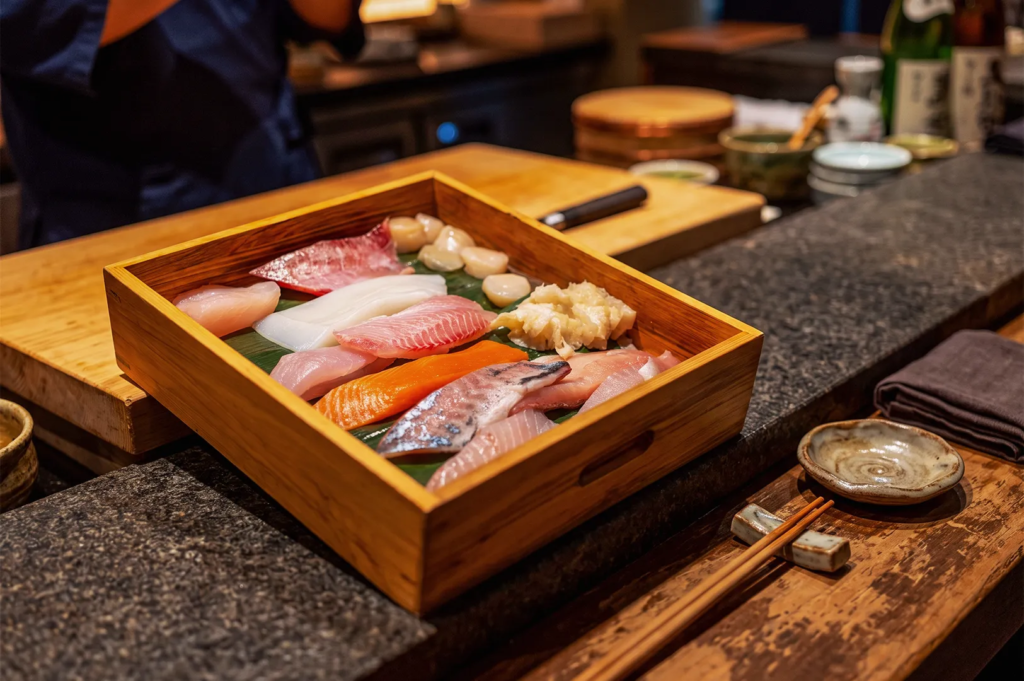
- Premium ingredients and finest seasonal ingredients. Many counters import seasonal seafood from Japan through specialist suppliers. Rare fish, uni, and fatty tuna don’t come cheap, and neither does flying them in.
- Chef expertise and traditional Japanese techniques. Knife work, rice seasoning, and fish preparation take years to master. You’re paying for that training in every piece.
- Limited seating and few formal dining experiences. Many high-end counters seat fewer than a dozen guests per session. Fewer covers mean each one carries more of the cost.
- Labor-intensive preparation. Some fish is cured, marinated, salted, or aged long before service begins.
- Seasonal ingredients and seasonal specialties. Menus follow what’s at its peak, which often means the most sought-after produce of the moment.
- Service and dining experience. Courses arrive in a carefully timed sequence, often with the chef’s full attention.
- Operating costs. Rent, staffing, equipment, and logistics all feed into the final figure.
One honest caveat: expensive doesn’t automatically mean better. Price can’t guarantee skill, and it certainly can’t guarantee you’ll enjoy the meal.
How Much Does Omakase Cost in Singapore? Exploring Sushi Restaurants and Japanese Restaurants
Omakase in Singapore spans a remarkably wide range. As a rough guide, entry-level lunch menus can start under S$100, mid-range experiences often sit between S$100 and S$200, and luxury counters can run S$350 to S$500 or more per person. Treat these as indicative bands rather than fixed prices, and always check the restaurant’s current menu.
The detail that catches many first-timers off guard is the “++” after the price. It means a service charge and GST will be added. Here’s how it works, using the same method the tax authority uses:
| Item | Amount |
|---|---|
| Food & beverage | S$100.00 |
| 10% service charge | S$10.00 |
| Subtotal | S$110.00 |
| 9% GST (on S$110.00) | S$9.90 |
| Total | S$119.90 |
Notice that GST is calculated on the subtotal, including the service charge. On a pricier dinner for two, that difference adds up quickly, before you’ve ordered a glass of sake.
What Happens During an Omakase Experience? A Unique Dining Experience at the Sushi Restaurant Counter
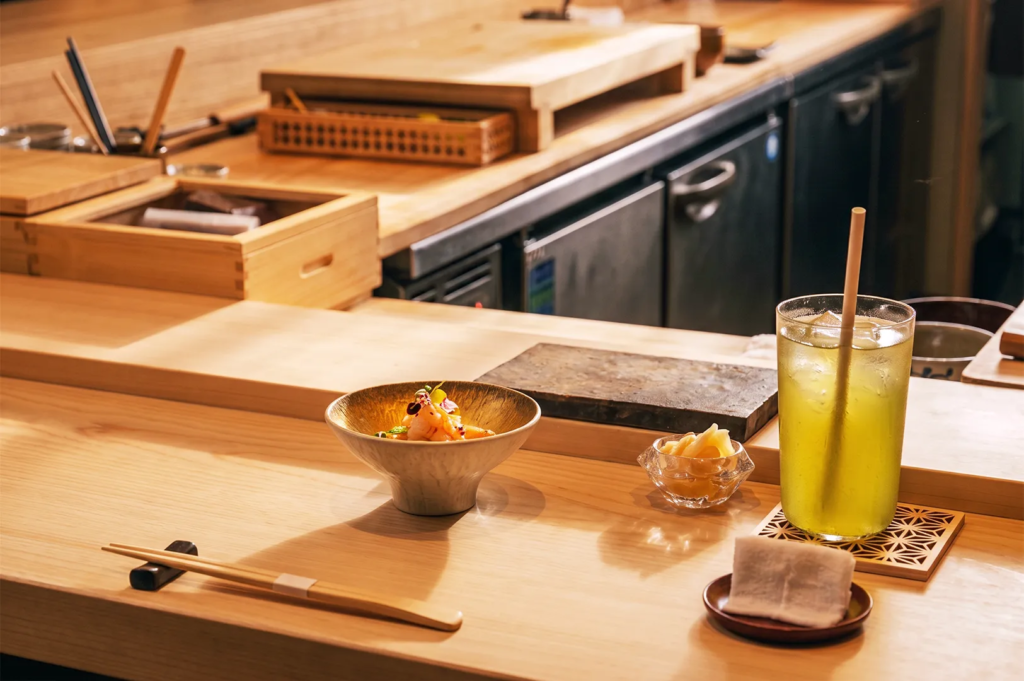
Most meals unfold at a counter, with the chef working an arm’s length away. There’s no hidden kitchen, so you watch each piece being sliced, shaped, and set down in front of you.
A typical omakase meal moves in a gentle arc. It often begins with small appetizers, then sashimi, followed by cooked dishes, a run of nigiri, a warm soup, and a light dessert, often seasonal fruit. Lighter flavors tend to come first, with richer ones building toward the end.
The pacing matters as much as the food. A good chef reads the room, slowing down when guests linger and moving on when they’re ready. That quiet attentiveness is what turns dinner into a culinary experience.
It’s also worth remembering that recognition from the Michelin Guide isn’t the only measure of a worthwhile meal. To understand what those stars actually signal, read more here.
What Makes a Good Omakase Restaurant? The Artistry and Creativity Behind the Experience Omakase
Once you know what to look for, the differences between counters become far easier to notice.
The rice. Sushi rice, or shari, is half of every piece. It should be balanced, neither too sour nor too sweet, and never packed too tightly.
Ingredient preparation and fresh ingredients. The freshest fish isn’t always the best fish. Some seafood improves with curing or careful aging, which develops flavor and texture.
Temperature and timing. Nigiri is made to be eaten at a precise moment, with the rice and fish at their ideal temperatures together.
Menu progression and set menu style. The meal should feel coherent, like a story, rather than a parade of expensive ingredients.
Hospitality and dining experience. You should feel welcome, not tested. A reasonable question should never feel embarrassing.
Omakase Etiquette: What First-Timers Should Know About Japanese Dining
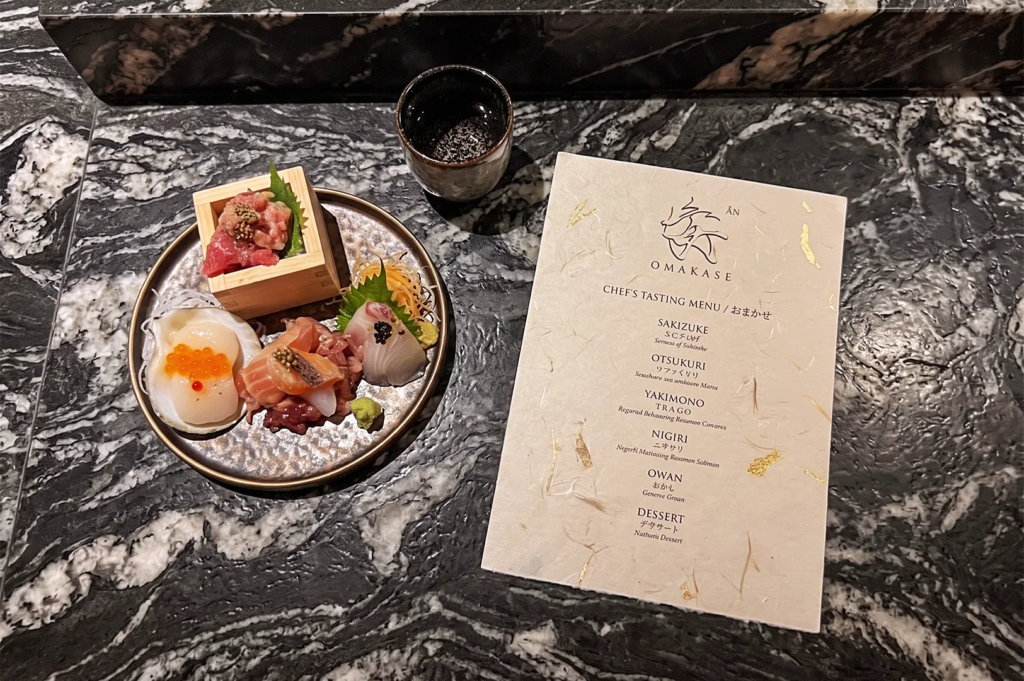
You don’t need to master every custom, but a few habits go a long way.
- Eat nigiri promptly. It’s served at its ideal temperature, so don’t let it sit while you take photos.
- Skip the heavy perfume. Strong fragrance can overwhelm the delicate aromas of fish and rice.
- Share dietary restrictions when booking. Ingredients are often sourced for an exact number of seats, so substitutions on the night are limited.
- Arrive on time. Many counters run fixed seatings, and courses may begin without you.
- Ask questions respectfully. Curiosity is welcome. Just pick a moment when the chef isn’t mid-cut.
Is Omakase Worth the Money? A Spiritual Companion to Your Taste and Senses
Honestly, it depends on what you value. If you care about seasonality, technique, and the intimacy of watching a chef work, a great omakase experience can feel worth every dollar. If you’d rather choose your own dishes or simply want a filling meal, you may find better value elsewhere.
My advice is to start modestly. A lunch menu offers the full rhythm of Japanese dining at a gentler price. If it clicks, you’ll know where to go next.