What if a meal could tell you what season it is without anyone saying a word? Kaiseki is a traditional Japanese multi-course dining experience—often seen as Japan’s haute cuisine—where each course balances flavor, presentation, and the changing seasons. A delicate arrangement of vegetables, a carefully chosen ceramic bowl, or a single seasonal ingredient can reveal more than the food itself.
This is the philosophy behind kaiseki, and it is what makes the meal so compelling for food lovers exploring Japanese cuisine, travelers looking for an authentic cultural dining experience, and anyone curious about the art and thinking behind it. When I first read about it, I assumed it was simply Japan’s version of a tasting menu. The more I learned, the clearer it became that kaiseki is something quieter, older, and far more deliberate.
If that conversational style appeals to you, explore our guide to Singapore’s omakase dining counters worth sitting down for.
Kaiseki Meaning: Understanding Kaiseki Ryori
The simplest kaiseki definition is this: kaiseki, or kaiseki ryori, is a traditional Japanese multi-course meal served in a set order. In kaiseki cuisine, there are two main forms, written as 会席 and 懐石. The MICHELIN Guide describes it as Japan’s haute cuisine, a meal in which ingredients, tableware, and presentation all reflect the season at its peak.
From Tea Ceremony to Haute Cuisine
The roots of kaiseki meaning lie in humility. According to Japan Guide, kaiseki began centuries ago as a form of kaiseki cuisine: the simple meal served at the tea ceremony, built around rice, one soup, and three dishes. Over time, it grew into an elaborate dining style favored by aristocratic circles, though its early courses could still include a delicate soup dish.
The MICHELIN Guide traces modern kaiseki to three influences: the refined dining culture of Kyoto’s ryotei (traditional restaurants), the rituals of the tea ceremony, and the banquet traditions of the samurai class. Its structure and aesthetic principles became more clearly defined during the Edo period. Hyotei in Kyoto, founded over 400 years ago, is among the restaurants most closely tied to that history, and it still serves kaiseki today.
What Makes a Kaiseki Dinner Special?
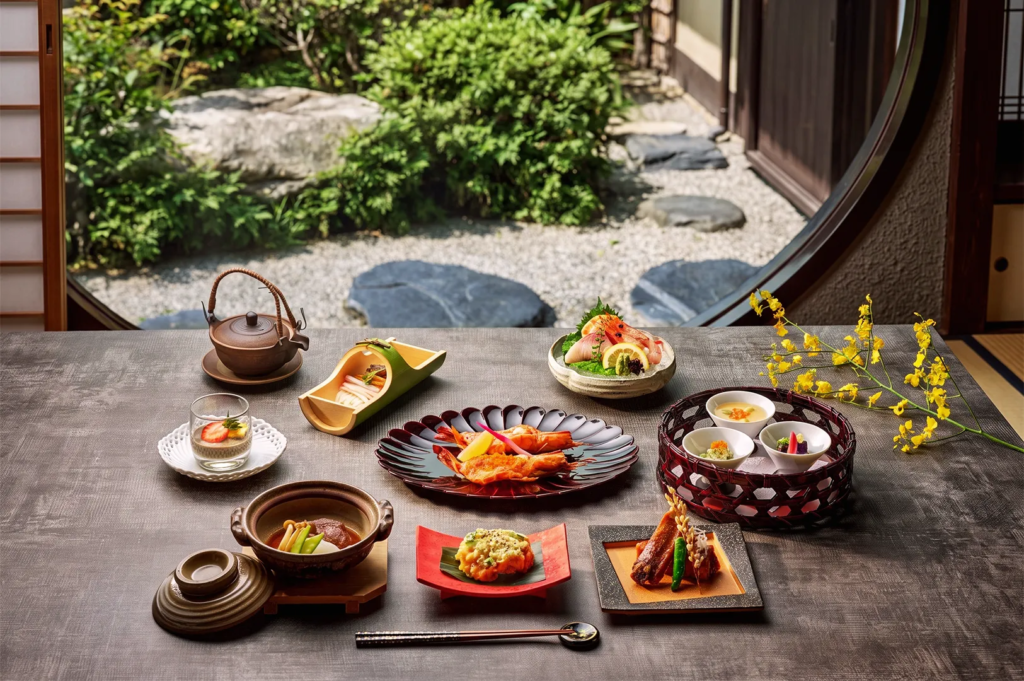
A kaiseki dinner isn’t built around abundance. It’s built around timing.
The Season on the Plate
Seasonality shapes everything, and kaiseki highlights seasonal ingredients. Some chefs follow the four traditional seasons. Others go further and work with Japan’s 72 microseasons, short periods of about five days, each with its own natural markers. That means a dish served in early autumn may differ from one served just a few weeks later.
Tableware and Visual Composition
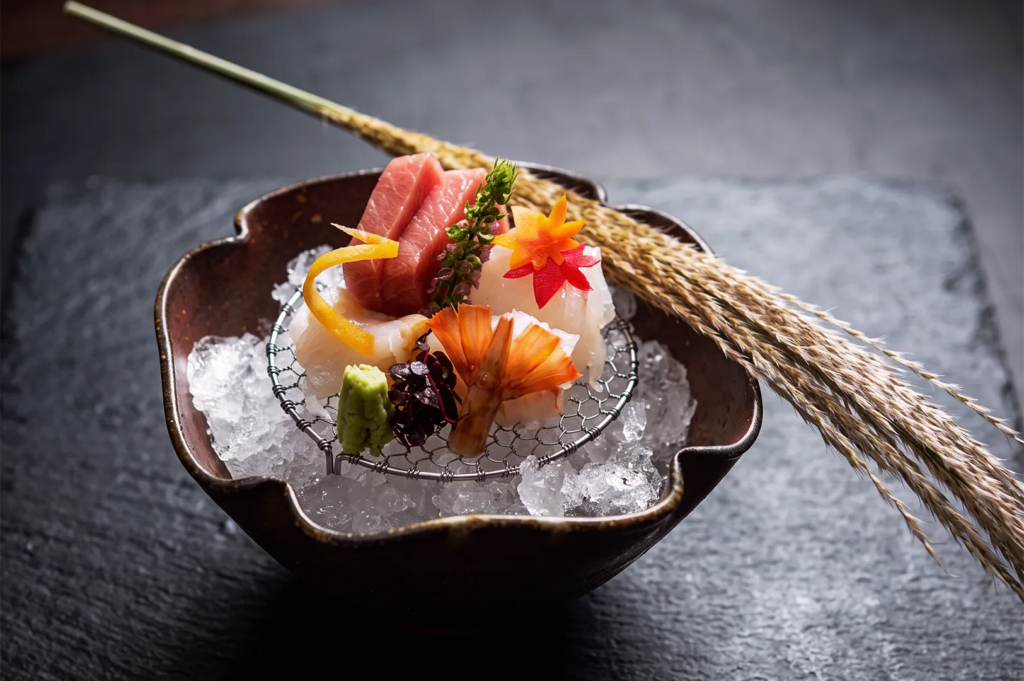
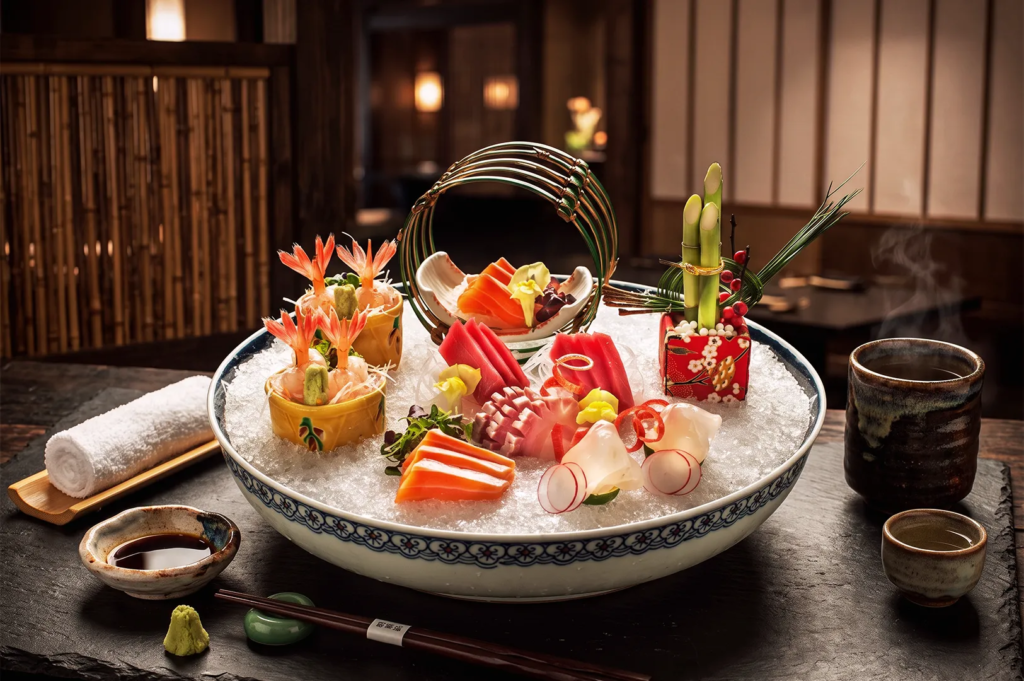
In kaiseki, the bowl matters almost as much as what’s inside it. Chefs choose ceramics, lacquerware, and garnishes to echo the time of year. Precision, timing, and visual balance are treated as seriously as taste. The goal isn’t intensity. It’s control, using temperature, texture, and presentation to capture a season in its purest form, with visual composition that also suggests carefully prepared food, not just elegant plating.
The Spirit of Cha Kaiseki
Cha kaiseki refers to the lighter meal served with a formal tea ceremony, the original form of the tradition. The tea ceremony itself centers on harmony, respect, purity, and tranquility, principles associated with tea master Sen no Rikyu. Even in today’s elaborate restaurant versions, I find that spirit remains. The meal feels considered rather than showy.
For broader guidance on table manners at a formal meal, read more here.
The Traditional Courses of a Kaiseki Meal
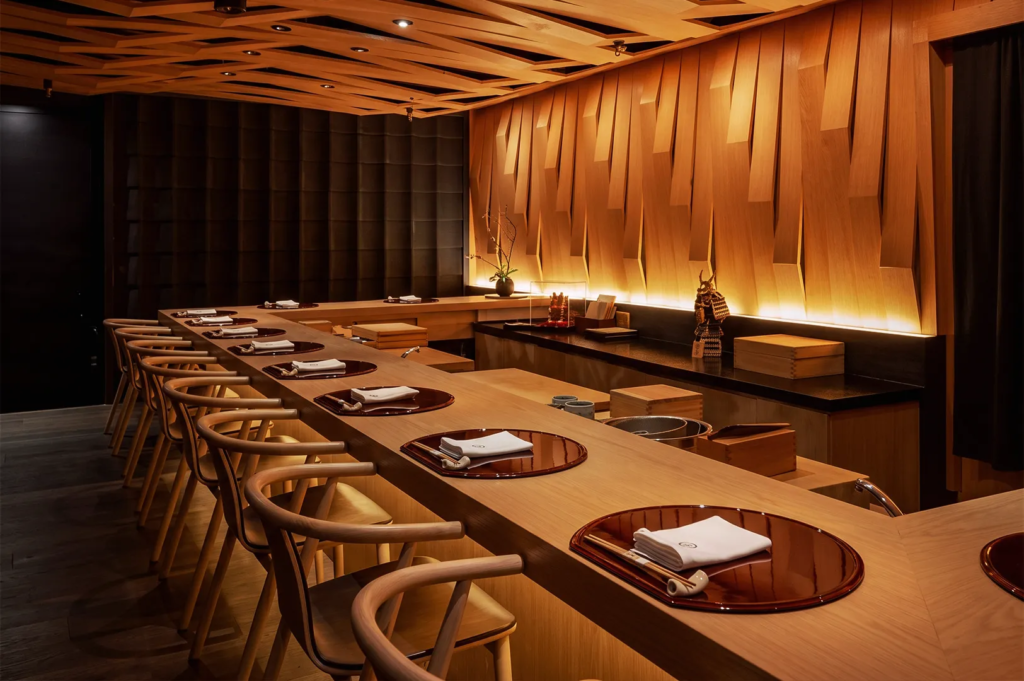
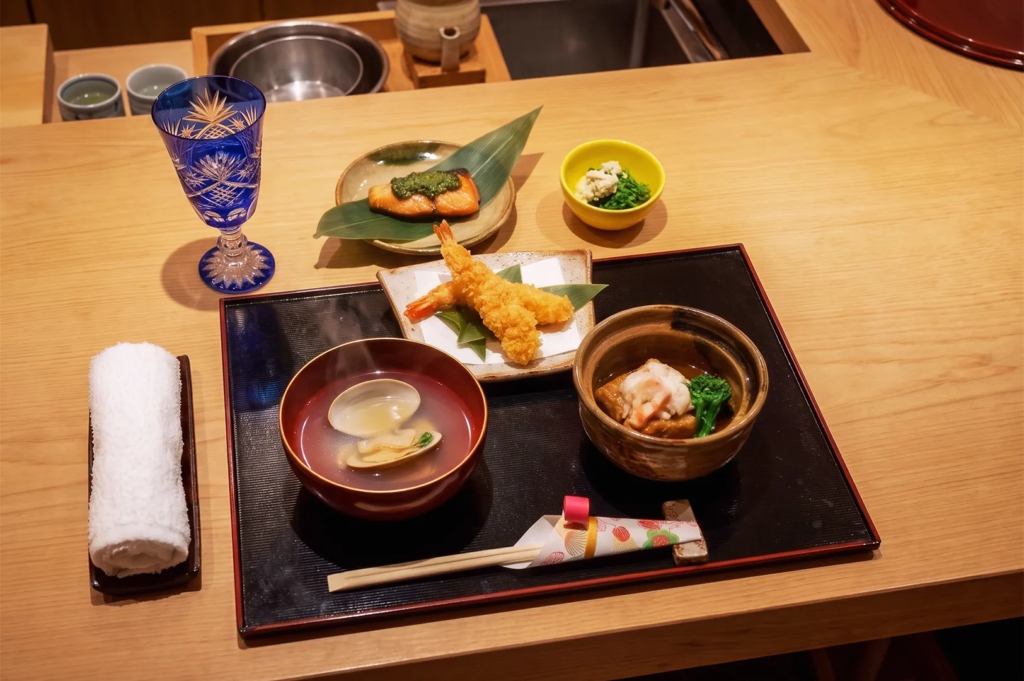
A kaiseki meal can range from as few as five courses to 15 or more. Japan Guide notes that each dish usually represents a particular cooking method. Chefs also have real freedom to add, omit, or substitute courses to highlight regional ingredients, seasonal produce, and their own style. Here’s a typical progression. A full kaiseki course still follows a carefully structured set menu, even when chefs adapt individual courses. These kaiseki dishes are usually timed so the main dishes come before the rice course near the end.
- Sakizuke: The first bite, similar to a French amuse-bouche.
- Wanmono and the soup course: Often a suimono, a clear dashi broth with seasonal ingredients, served in a lidded bowl. It is the formal soup dish in the sequence. The MICHELIN Guide calls the wanmono the most important dish in the sequence, a true test of a chef’s skill.
- Hassun: A course that sets the seasonal theme, combining several small elements. Japan Guide notes it’s often served on a long tray of about 24 centimeters.
- **Tsukuri:**Seasonal sashimi, thinly sliced and often served with shredded daikon, wasabi, and soy sauce.
- Yakimono: The grilled dish (see below).
- Mushimono: A steamed dish, most commonly chawanmushi, a silky savory egg custard.
- Agemono: A fried dish, often light tempura with salt or a delicate dipping sauce. Tempura kaiseki is one variation that focuses on refined frying techniques.
- Nimono or takiawase: A simmered dish of vegetables with meat or seafood. In takiawase, ingredients are often simmered separately, then brought together.
- Shokuji: The rice dish near the close of the meal, served with miso soup and Japanese pickles.
- Mizugashi: A fruit course, often the final course and typically a fruit-based dessert.
- Wagashi: Traditional Japanese sweets to close the meal.
Grilled Fish and the Yakimono Course
The yakimono is often grilled fish, though it may also be meat such as wagyu. Classic methods include straw, charcoal, and robata grilling. Depending on the region, it might be a freshwater fish such as sweet fish or a saltwater catch.
Why the Rice Course Comes Last
Western diners often expect the most substantial dish in the middle. In kaiseki, diners are meant to savor the earlier main dishes before the rice course arrives near the end. It’s a grounding finish: rice, miso soup, and pickles bring the meal back to something simple and comforting before dessert.
Kaiseki vs Omakase: Two Styles of Japanese Cuisine
These terms are often confused, but the MICHELIN Guide explains the difference neatly: kaiseki is a style of cuisine, while omakase is a style of service.
Kaiseki follows a prescribed sequence of courses shaped by season, balance, and occasion, with a fixed set menu. Omakase means “I leave it up to you,” so the chef decides what to serve, sometimes in the moment, based on the day’s ingredients and your reactions at the counter.
Both express deep Japanese hospitality, but they feel different. Kaiseki is a composed performance. Omakase is a conversation.
How Kaiseki Differs From a Western Tasting Menu
On paper, both are multi-course meals. In practice, they follow different instincts.
Many Western tasting menus showcase a chef’s creativity through bold techniques and surprising combinations. Kaiseki leans toward restraint. The aim is to let natural flavors speak, highlighting seasonal ingredients at their best rather than transforming them beyond recognition.
Tableware is also part of the story in kaiseki. The bowl, its texture, and even the lid you lift are woven into the dining experience. And while a tasting menu may change when the chef has a new idea, kaiseki changes because nature does.
Why Is a Kaiseki Dinner Expensive?
Kaiseki can be costly, and the reasons run deeper than luxury ingredients.
- Seasonal sourcing: Fresh seafood and seasonal vegetables must be sourced at their peak, often in small quantities.
- Specialist preparation: Each course calls for a different technique, from dashi-making to grilling and simmering.
- Time and skill: Chefs spend years learning to balance flavor, timing, and presentation.
- Tableware: Fine ceramics and lacquerware are part of the experience, and many are handcrafted.
- An intimate setting: Many kaiseki restaurants offer private rooms or counter seating for a small number of guests.
- Omotenashi: The Japanese tradition of wholehearted hospitality shapes every detail of service.
Your First Kaiseki Dinner: What to Expect
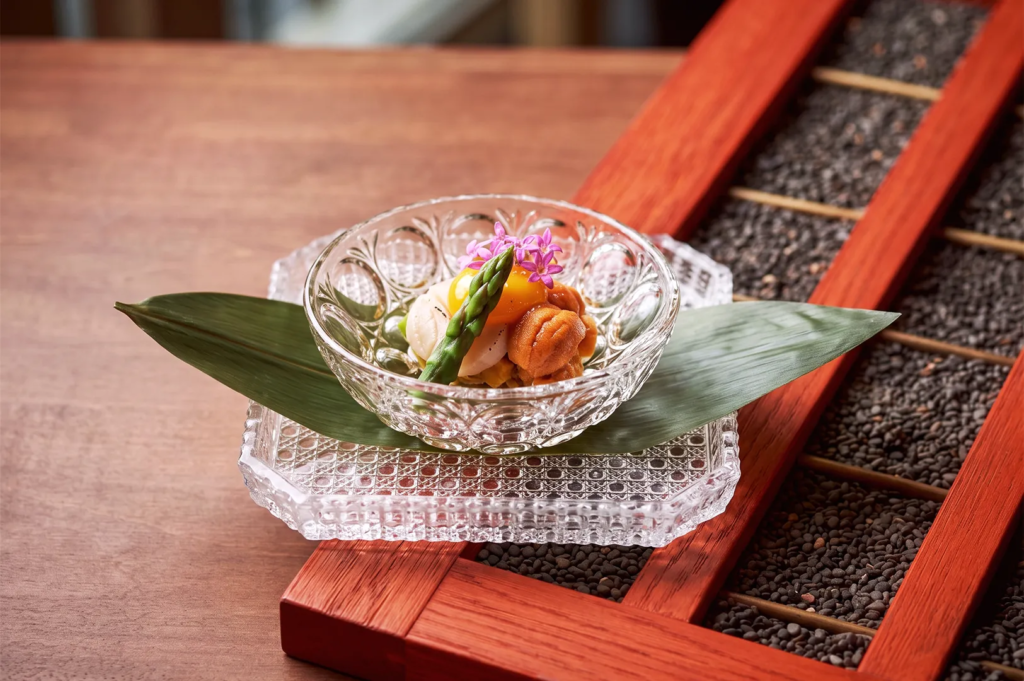
A little preparation goes a long way toward enjoying the meal.
- Arrive on time. Courses are carefully timed, and late arrivals disrupt the rhythm.
- Share dietary restrictions early. Because ingredients are sourced in advance, substitutions can be limited, and not all restaurants can accommodate allergies or other dietary restrictions. Mention allergies when you book and confirm in advance.
- Dress with care. Smart casual is a sensible default, but always check the restaurant’s policy.
- Let the pace guide you. Kaiseki isn’t meant to be rushed. Allow time to notice each bowl before you begin.
- Plan for the full evening. A kaiseki dinner typically lasts about 2 to 3 hours, so give yourself enough time.
- Ask questions thoughtfully. Curiosity about an ingredient or a seasonal reference is usually welcome.
Where to Experience Kaiseki: Restaurants in Kyoto and Beyond
Kaiseki Restaurants in Kyoto
Kyoto remains the traditional heartland of kaiseki. Its ryotei shaped the cuisine, and several still carry it forward, with Michelin stars serving as one marker of prestige. The MICHELIN Guide highlights Hyotei for its centuries-old lineage, Kikunoi Honten, a three star michelin restaurant in Kyoto, for treating kaiseki as a living tradition, and Kodaiji Wakuden for its ritual-rich, seasonal cooking. Japan Guide also notes that kaiseki can be enjoyed by staying at a ryokan, a traditional Japanese inn.
Exploring Kaiseki Restaurants Closer to Home
In Singapore, kaiseki-style meals appear at some Japanese restaurants, though formats vary widely. Before booking, I’d suggest asking how closely a menu follows the traditional sequence, whether it changes with the seasons, and what dietary needs it can accommodate, especially if you want a great meal built around seasonal courses and fresh vegetables. That small step helps you find an experience that matches your expectations, and it can make planning easier for international visitors.
In Kyoto, famous names often come up first, including Kikunoi Honten, a three star Michelin restaurant in Kyoto, while smaller ryotei can still feel like a hidden gem. Kikunoi also has a sister restaurant often seen as a more accessible option. Elsewhere, some acclaimed counters have earned two Michelin stars, and the close interaction with the chef can turn the evening into a wonderful dinner.
Is a Kaiseki Dinner Worth It?
It depends on what you hope to take from a meal.
If you enjoy quiet detail, seasonal storytelling, and the beauty of food presented with intention, a kaiseki dinner can be deeply rewarding. It’s a natural choice for special occasions, when the slower pace becomes part of the pleasure.
If you prefer bold flavors, generous portions, or the freedom to choose your own dishes, you may find it too restrained.
For me, the real value of kaiseki lies in attention. It asks you to slow down, look closely, and notice the season unfolding one bowl at a time. That’s rarely just a meal. It’s an invitation to see food, and time itself, a little differently.